

Hey, I’m Martin from Chicago. Like a lot of people here in the U.S., I started paying more attention to metabolism after noticing how much it affects energy, weight, and overall health. There’s a ton of mixed information online, so for this post, I took the time to research trusted, high-authority health and nutrition websites and break everything down in a simple way. This article is written purely for educational purposes, based on research—not hype—to help you better understand how metabolism works and why it matters.
People often talk about having a fast metabolism as a superpower. We all know someone who eats whatever they want, stays thin, and has a lot of energy all day. On the other hand, a lot of people have trouble losing weight even though they eat right and stay active. So, a lot of people have this question in mind: why do some people have fast metabolisms?
The body’s metabolism is like an engine that turns food into energy. This energy is used by the body for basic but very important activities like breathing, digestion, moving, balancing hormones, and even repairing cells. Some people naturally burn calories faster than others, but genuine metabolic health isn’t just about speed; it’s also about balance.
Fast Metabolism vs. Healthy Metabolism
When a person has a fast metabolism rate, they burn calories extremely fast, even when the body is in resting mode. A person with a rapid metabolic rate will be able to sustain their weight, experience higher energy levels, and compete athletically better than someone who does not have a speedy metabolism, but a rapid metabolic rate does not mean a person is healthy.
For some people with extremely fast metabolisms:
- The individual may have difficulty gaining or maintaining weight.
- They may constantly feel like they haven’t eaten or aren’t satisfied.
- They may have a vitamin deficiency due to a poorly balanced diet.
Merely burning calories quickly does not guarantee a healthy metabolism. Balance is what matters. A person should have an efficient, well-balanced metabolism that does not put undue strain on the body.
It is essential to establish a metabolism that works well for the long term, so the focus of increasing the speed of your metabolism should be on the establishment of a well-oiled metabolism through proper nutrition, regular exercise, proper sleep, and healthy living habits.
Is Fast Metabolism and Body Weight Connected?
Metabolism plays a role in how many calories your body burns, but it does not work alone when it comes to body weight. Many people think weight gain happens only because of a slow metabolism, but this is not completely true.
People with higher body weight often burn more calories than they realise, even while resting. This is because their bodies need more energy to support daily functions like breathing, circulation, and movement. They usually have:
- A higher Basal Metabolic Rate (BMR) to keep the body functioning
- Higher calorie burn during physical activity, since moving a heavier body uses more energy
- Different levels of muscle mass, which strongly affect how fast calories are burned
Lean muscle mass is the most significant thing that affects how fast your metabolism works. Even when you’re not working out, muscle burns more calories than fat. That’s why two people who eat the same food and do the same things may nevertheless lose weight in completely different ways.
In actuality, metabolism isn’t the only thing that affects weight management. Daily lifestyle decisions are just as important. These include: Eating meals that are balanced and healthy
- Being active physically
- Getting adequate rest
- Keeping your stress levels in check
So, instead of worrying about whether you have a fast or slow metabolism, it’s more helpful to focus on building healthy habits that support your metabolism and help your body work efficiently over time.
Signs of a Fast Metabolism
The common signs of having a fast metabolism are:
- Hard to gain weight, even after eating enough
- Feel hungry again soon after meals
- Strong appetite compared to others
- Feel warm easily or sweat more
- Have steady energy throughout the day
- Quick digestion
- Slightly faster heartbeat or breathing
Although these signs can indicate a high metabolism rate, they do not guarantee that your overall health is also good. To maintain better health with a fast metabolism, it is necessary to have a proper intake of essential nutrients.
Understanding Basal Metabolic Rate (BMR)
Basal Metabolic Rate (BMR) is the number of calories your body needs to perform essential functions while at rest-such as breathing, circulation, hormone regulation, and temperature control.
Your BMR is influenced by several factors, such as:
- Age
- Gender
- Height & Weight
- Muscle Mass
- Genetics
- Sleep
- Physical Activity
- Diet Quality
Natural Ways to Boost Your Metabolism
If you are having a slow metabolism and you want to enhance it, then you can improve your metabolism rate just by making small changes in your life as well as in your eating patterns.
1. Build Lean Muscle with Strength Training
Resistance training helps build lean muscle, and muscle burns more calories than fat-even when your body is at rest. This means the more muscle you have, the higher your metabolism stays throughout the day.
Effective resistance exercises that are easy to perform and you can in your routine:
- Squats
- Lunges
- Push-ups
- Weight or resistance-band training
To make these exercises more beneficial, try to perform 3-4 strength training sessions per week. Even a small healthy change in your overall physical routine can improve your metabolism rate and enhance your physical and mental health.
2. Stay Physically Active
To improve your metabolism, it is important that you stay physically active. You can keep yourself active by small activities like:
Walking on a regular basis for 15-20 minutes
- Cycling
- Doing short HIIT workouts
- Using stairs in place of a lift
- Stretching or moving between long sitting hours
3. Eat Enough Protein
One of the main reasons protein has such a significant effect on increasing your metabolism is that it has the highest TEF or thermic effect of food. This means that a person uses more energy to digest, absorb, and utilize protein than they do with carbohydrates or fats, resulting in 20-30% of the calories consumed from protein being burned off while digestion is taking place. Therefore, by increasing your protein intake, you can increase your calorie burning throughout the day.
Protein also helps in:
- Preserving and building lean muscle tissue
- Promoting satiety longer
- Decreasing instances of hunger and cravings
- Promoting Consistent Metabolism ( steady state)
Eating protein at each meal helps to ensure that your metabolism is working optimally throughout the day.
Protein sources include:
- eggs
- fish
- chicken
- lentils/pulses
- paneer
- Greek yogurt
4. Don’t Skip Meals or Crash Diet
Extreme calorie restriction can slow down your metabolic rate because that turns the body’s natural mechanisms into survival mode. When this happens, the body is saving energy by burning fewer calories, breaking down muscles, and increasing fat storage. This response evolved to protect us during times of food shortage, but it works against modern weight-loss goals.
5. Stay Hydrated
Keeping yourself properly hydrated plays a very important role in maintaining a healthy metabolism. It helps in aiding digestion, nutrient absorption, and lipolysis, that is, fat breakdown. Even slow dehydration affects the body’s metabolic rate by slowing down the calorie-burning process.
Staying hydrated also helps control appetite, improve energy levels, and support exercise performance, all of which keep your metabolism working efficiently.
6. Have a Proper Sleep Routine
Sleep plays a very important role in having a healthy metabolism. Poor sleep quality disrupts hormones like leptin and ghrelin, which play an important role in regulating hunger hormones and slow down the calorie-burning process.
To keep your metabolism healthy, get a restful sleep of 7-9 hours, it will reduce cravings and enhance energy levels.
7. Manage Stress Levels
Chronic stress affects the metabolism negatively in a number of ways. When the body experiences chronic stress, it produces cortisol, which causes a decrease in the body’s ability to burn calories, an increase in fat storage (especially around the abdomen), and an increase in appetite for high-calorie foods.
The longer chronic stress continues, the more difficult it becomes for an individual to manage their weight, as well as to have the energy to live their life fully.
8. Use Caffeine in Moderation
Caffeine, a central nervous system stimulant found in coffee and green tea, slightly increases metabolism and boosts calorie burning through increased thermogenesis (heat production).
Research shows caffeine can raise an individual’s metabolic rate by 3% to 11%, depending on the person and the amount consumed. Green tea, which contains catechins, can further enhance fat breakdown by increasing fat oxidation.
Metabolism-Boosting Foods
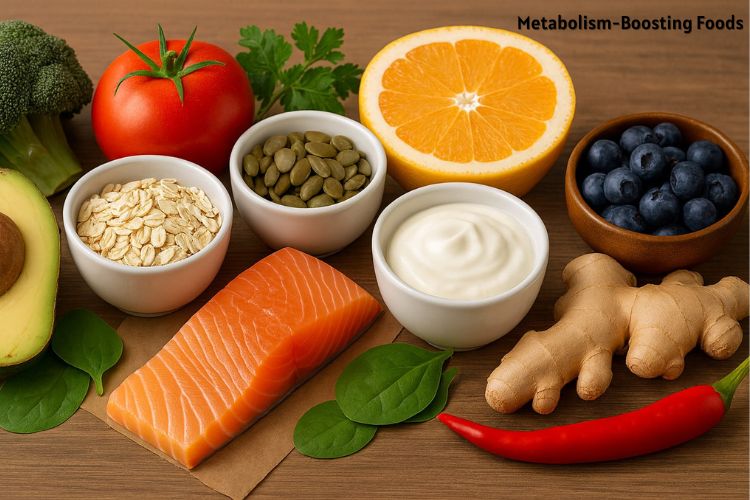
While no single food can magically speed up your metabolism, certain foods can support metabolic function and help your body burn energy more efficiently. Including these in your diet can make a noticeable difference over time:
- Spicy foods (chilli, peppers)
- Protein-rich foods (eggs, fish, chicken, lentils, Greek yogurt)
- Leafy green vegetables
- Green tea
- Black coffee
- Whole grains (oats, quinoa, brown rice)
- Ginger
- Flaxseeds
- Avocados
What Factors Affect Metabolism Speed?
There are several factors that affect your metabolism rate, such as:
1. Genetics
Individual metabolism affects their ability to metabolise calories and lose or maintain weight. Those who are genetically predisposed to have a higher metabolic rate have an easier time with weight loss and weight maintenance because they naturally burn calories faster than others.
2. Age
As we get older, our metabolism decreases due to gradual muscle loss and changes in hormone levels.
3. Muscle Mass
A higher percentage of lean muscle mass increases the amount of calories that your body expends during rest because muscle has a higher caloric expenditure than fat tissue. Therefore, people with a higher percentage of muscle mass have higher metabolic rates.
4. Hormones
The primary hormones that regulate your metabolism are thyroid hormones; therefore, when you eat, they dictate the rate at which your body will metabolise that food.
5. Physical Activity
People who regularly engage in physical activity burn additional calories both while exercising and at rest; therefore, people who regularly exercise can keep their metabolic rates elevated throughout the day.
6. Quality of Food
Having foods enriched with proteins and nutrients in your meals helps in keeping your muscles healthy, enhances energy production, and improves overall metabolic function. This makes your body metabolise food effectively.
Is Having a Fast Metabolism Always a Good Thing?
Although a fast metabolism may seem beneficial to you from a physical perspective, a fast metabolism does not guarantee better health or energy levels.
Here are some examples of possible negative aspects of having a fast metabolism:
- Difficulty gaining or keeping muscle
- Frequent hunger
- Feeling fatigued or low in energy when not eating enough calories
- Difficulty keeping or managing a healthy body weight
- Nutrient deficiency due to a low-quality diet
- Quickly digesting food and going to the bathroom frequently
- Feel “hot” or sweat more than usual
Thus, it is more important to have a balanced, well-functioning metabolism than to have a fast metabolism.
Some Common Myths About Fast Metabolism
Myth #1: If I have a fast metabolism, I can eat anything I want.
Having a fast metabolism doesn’t imply you can eat anything you want and not gain weight. No matter how fast or slow your metabolism burns off calories, a bad diet will make you lack nutrients and feel tired. Eating a healthy diet will provide your body with the nutrients it needs to work correctly.
Myth #2: Genetics are the only thing that affects how fast my metabolism works
Genetics affects how fast and well our metabolism burns calories, but that doesn’t mean it’s the sole reason we gain weight. Our bodies’ ability to burn calories is affected by many other things, such as what we eat, how much we exercise, how much sleep we get, and how we deal with stress.
Myth 3: People who are thin are always healthy
Being slim doesn’t mean you’re healthy. Your overall health depends on more than just your weight. It also depends on things like what you eat, how much you exercise, and how well your metabolism works.
Myth #4: Only supplements are very effective in speeding up metabolism
There are supplements that can help boost your metabolism, but supplements do not replace the need for a healthy diet, regular exercise, and a sufficient amount of rest.
FAQs
1. Do female hormones affect the metabolic rate of the body?
Hormones like estrogen, progesterone, and thyroid hormones alter metabolism by changing how the body uses energy, burns calories, and stores fat during menstruation, pregnancy, and menopause. They also change appetite and energy levels.
For instance, decreasing estrogen levels during menopause normally slows down the metabolic rate, while pregnancy speeds it up since the body needs more energy.
2. What are the common symptoms of slow metabolism?
Some common symptoms of slow metabolism are:
- Slow weight loss
- Constant fatigue
- Feeling cold
- Hair loss
- Constipation
- Mood swings
3. Can I increase metabolism after 40?
Yes, it is possible to enhance your metabolism rate after turning 40. Your daily habits tell how your metabolic rate will be. To make it more effective, you can add strength training in your routine, include more protein, keep yourself physically active, drink plenty of water, have a proper sleep routine, and keep yourself stress-free.
4. Is fast metabolism genetic?
Genes play an important role in your metabolism rate, but it does not mean that they are entirely responsible for how fast your metabolism works. Other factors like your eating habits, your physical routine, and how active you are in your daily life, impact how fast your metabolism works.
5. Does fast metabolism guarantee weight loss?
A fast metabolism rate does not mean that you will not gain weight. Your weight is affected by a lot of other factors, like your calorie intake, the type of food you are eating, and your daily activities, like how physically active you are.
Final Thought
A fast metabolism may be helpful, but it isn’t the most important part of a good, healthy weight management plan or a way to keep your metabolism healthy.
In addition to burning calories, there are other things you do every day that are very important for keeping your physical health. You may naturally speed up your metabolism more efficiently if you make healthier choices in your daily life, like having a proper and nutritious meal, proper sleep, more physical activity, and aso ll.
