

Have you ever thought about what your normal blood sugar is, what it means, or why it is so important to keep your blood sugar levels balanced? Well, if you really are curious about all these things, you have come to the right place. In this short guide, you will get to know everything you might be curious about regarding blood sugar easily and simply.
What is Normal Blood Sugar?
Glucose, or blood sugar, is a form of sugar that moves through your blood and into your cells for energy production. Your body breaks down food into glucose (sugar) when you eat it, especially carbohydrates like bread, rice, fruits, and sweets. Insulin helps glucose get into your cells, where it is turned into energy for your body.
Glucose is like a fuel for your body; similar to how a car needs fuel to run properly, glucose powers your body to work effectively. Your brain uses 20% of glucose, which makes eating healthy meals regularly very important. Normal blood sugar means your glucose level is in a healthy range. Between 70 and 99 mg/dL when fasting and below 140 mg/dL two hours after eating is the normal blood sugar in general.
How Does Your Body Manage Blood Sugar?
When you eat something, your body converts it into glucose (or sugar), which increases your blood sugar levels. The pancreas, a small organ in your body, detects an increase in blood sugar levels and responds by releasing a hormone known as insulin. Insulin plays an important role in allowing processed glucose to enter your cells and produce energy.
Once glucose gets into your cells, two important things happen:
- Some amount of glucose is used immediately for energy
- Some of it is stored for later use
This whole process keeps your blood sugar from rising above dangerous levels. When your blood sugar drops, the pancreas releases another hormone called glucagon that tells your body to use stored glucose for energy. This procedure prevents your blood sugar levels from dropping below dangerous levels.
What Are Normal Blood Sugar Levels?
For Healthy Adults (Without Diabetes)
- In fasting, blood sugar between 70 and 99 mg/dL is normal
- Blood sugar levels of less than 140 mg/dL two hours after a meal are normal
- Your body can handle this much blood sugar easily
- 125 mg/dL or lower blood sugar is generally considered normal
For Children and Teenagers
Because kids’ and teens’ bodies are still growing, they have slightly different target ranges. Here are normal blood sugar levels:
For Children Ages 6-12:
- In fasting (before breakfast), blood sugar between 70 and 120 mg/dL is normal
- After eating, a level of less than 140 mg/dL is normal
For Teenagers:
- In fasting, between 70 and 140 mg/dL is normal
- After eating, a level of less than 140 mg/dL is normal
For Older Adults (Age 65+)
Older adults may have slightly different numbers:
- Normal blood sugar in fasting is between 70 and 140 mg/dL
- Blood sugar levels less than 160 mg/dL after eating are normal
The numbers shown might change depending on individual health conditions, so always consult your doctor for your accurate normal blood sugar.
Understanding the Different Blood Sugar Categories
According to health organizations, doctors usually put fasting blood sugar results into three main categories:
Normal Blood Sugar
- Fasting Level: 99 mg/dL or below
- It means your body is using glucose perfectly. Your pancreas is working great, and your cells are responding well to insulin.
Action Needed: No need to change anything. Maintain healthy eating and exercise habits.
Prediabetes (Early Warning)
- Fasting Level: 100 to 125 mg/dL
- It means your blood sugar levels are higher than normal, but not yet high enough to be diagnosed with diabetes. Consider this a yellow traffic light; it’s time to focus on your health.
Action Needed: This is the perfect time to make healthy lifestyle changes. Eating healthy, exercising regularly, and losing weight (if needed) can bring your levels back to normal.
Diabetes
- Fasting Level: 126 mg/dL or above (on two separate tests)
- It means that your pancreas is unable to produce enough insulin or that your cells aren’t responding to insulin. This situation needs immediate medical attention.
Action Needed: Talk with your doctor for a treatment plan.
Why Do Blood Sugar Levels Change?
Your blood sugar levels keep changing throughout the day, which is normal for everyone.
- After eating, your blood sugar increases because your body converts the food into glucose.
- Your cells use glucose to make energy in between meals. This results in your blood sugar dropping, which is completely normal.
- During sleep, your blood sugar is usually at its lowest after you’ve slept and before you eat breakfast.
- Doing physical activities makes your cells use glucose without the need for insulin, so your blood sugar may drop during an intense workout.
- When you are stressed, some hormones are released, which can cause your blood sugar to fluctuate.
- When you’re sick, sometimes it can affect how your body manages glucose, resulting in blood sugar changes.
All of these changes throughout the day are normal! Your body is constantly working to keep glucose in a healthy balance so it doesn’t cause you any problems.
What Else Do Doctors Check?
Doctors often use another test called HbA1c (also called hemoglobin A1c), besides testing your blood sugar level. This test gives an idea of your average blood sugar over the past 3 months. It’s like a report card of how you have managed blood sugar.
The A1C Ranges are for:
- Normal is less than 5.7%
- Prediabetes is 5.7% to 6.4%
- Diabetes is 6.5% or higher
Your doctor might also use this test to diagnose diabetes or to see how well you’re managing your blood sugar if you already have diabetes.
How to Keep Your Blood Sugar Levels Healthy
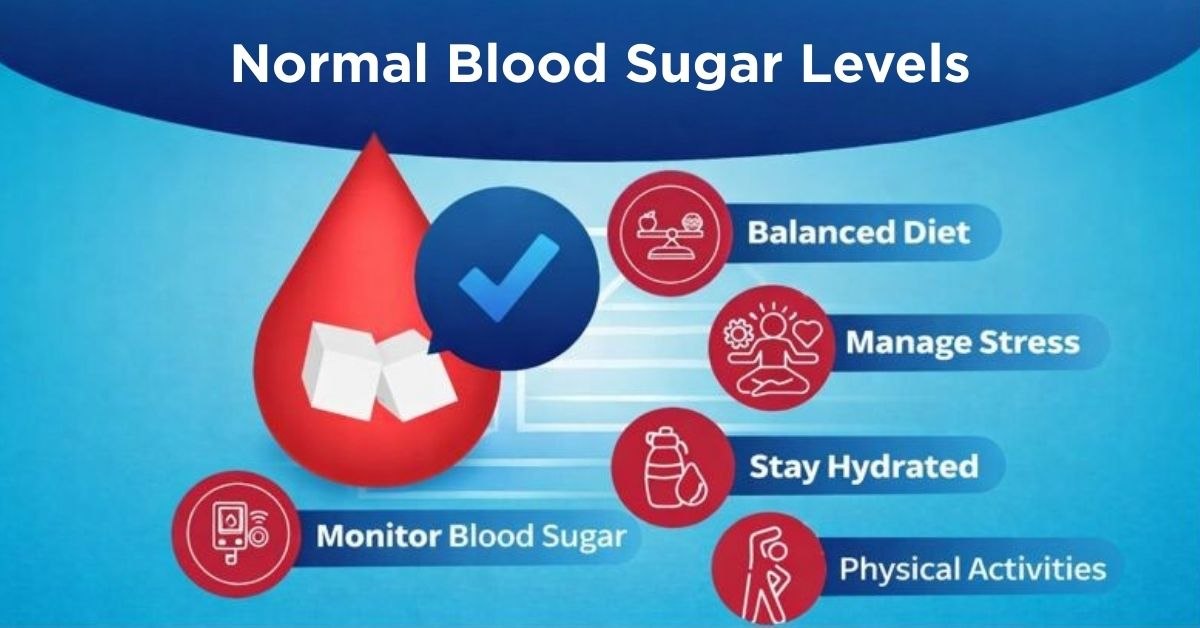
You can keep your blood sugar levels in a healthy range with healthy lifestyle changes. Here are some tried-and-true ways to keep your blood sugar levels in a healthy range:
1. Eat Smart Carbohydrates
All carbohydrates are not the same. You should choose:
- Whole grains like brown rice, whole wheat bread, and oats, instead of white bread and sugar
- Vegetables like leafy greens, broccoli, carrots, and beans
- Fruits such as apples, berries, and oranges are healthy options, but be mindful of portion sizes for high-sugar fruits.
2. Move Your Body Regularly
Health organizations recommend:
- At least 150 minutes of moderate exercise every week
- You can walk quickly, swim, ride a bike, dance, or play sports.
Exercise makes your cells better at using glucose, even when insulin isn’t around!
3. Maintain a Healthy Weight
If you’re overweight, even losing 5-10% of your body weight can significantly improve blood sugar management. Excess body weight makes it harder for your body to use insulin properly.
4. Eat Regular Meals
Skipping meals or eating irregularly can cause your blood sugar to fluctuate.
- You should eat breakfast within 1-2 hours after waking up
- You should eat meals every 3-5 hours
- You should eat healthy snacks if you get hungry between meals
5. Limit Sugar and Salt
Try to stay away from:
- Drinks with a lot of sugar, like soda, energy drinks, or fruit juices
- Sweets and desserts
- Salty processed foods
- Fast Food
6. Stay Hydrated
To stay hydrated, drink enough water all day. It helps your kidneys get rid of extra sugar and keeps your body working properly.
7. Get Enough Sleep
Not getting enough sleep can affect how your body uses glucose.
- 7–9 hours of sleep per night if you are an adult
- 8–10 hours if you are a teenager
- 9–12 hours if you are a child
8. Manage Stress
- Meditate or breathe deeply
- Do yoga
- Be outside for a while
- Do things you like
- Spend time with your family and friends
Use these stress-relieving methods to help manage your stress levels.
9. Regular Check-ups
Visit your doctor for routine blood sugar checks, especially if:
- You are either overweight or obese
- Your family has a history of diabetes
- You are older than 45
- You don’t do as much physical activity
When Should You Get Your Blood Sugar Checked?
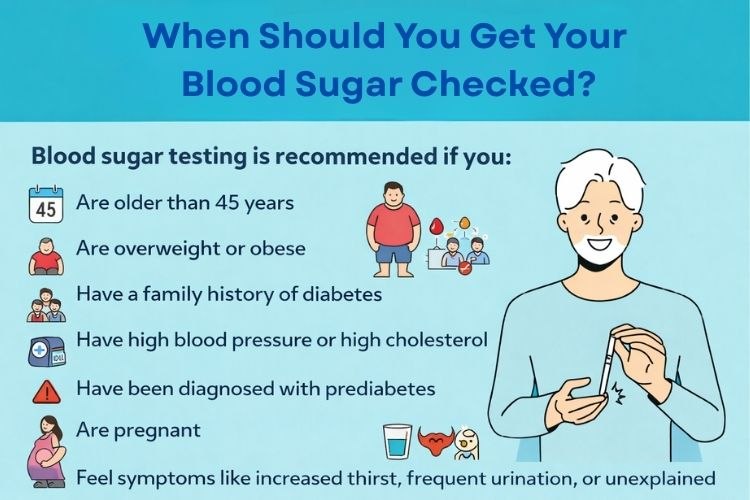
Blood sugar testing is recommended if you:
- Are older than 45 years
- Are you overweight or obese
- Have a family history of diabetes
- Have high blood pressure or high cholesterol
- Have been diagnosed with prediabetes
- Are pregnant
- Feel symptoms like increased thirst, frequent urination, or unexplained fatigue
Frequently Asked Questions
What is normal blood sugar?
Normal blood sugar is the healthy amount of sugar present in your bloodstream. Your body uses this sugar or glucose, to power your proper functioning all day.
Why does our body need blood sugar?
Blood sugar is like fuel that is necessary for your body to keep working properly without any issues. Without enough sugar or glucose, your body will feel weak and tired, and you won’t be able to do anything properly.
What is a healthy blood sugar level?
For most people, healthy blood sugar levels are between 70 and 140 mg/dL, depending on what and when they eat. These numbers will be different for everyone, so no fixed number can be applied to everyone.
Does blood sugar stay the same all day?
No, blood sugar doesn’t stay the same all day; it keeps changing throughout the day.
What happens if my blood sugar drops too low?
When your blood sugar drops too low, your body sends warning signs. You might feel confused, dizzy, very hungry, or very tired. If it’s not treated, it can be harmful in the long term.
What happens if my blood sugar becomes too high?
If your blood sugar gets too high, you might notice that you’re feeling quite thirsty, a bit tired, experiencing blurry vision, or needing to visit the bathroom more frequently. When your sugar levels are high, it can make you feel a bit off.
Final Thoughts
Whether your goal is to prevent diabetes, control prediabetes, or prevent it from worsening, understanding normal blood sugar can be your first step towards improving your health. Small and healthy lifestyle changes can achieve all this.
Your blood sugar levels are like a signal from your body that tells you how it’s doing. If you eat healthy, exercise daily, sleep enough, and manage your stress, your blood sugar levels will be balanced, which indicates your body is doing well.
When your blood sugar is balanced, you have more energy, can focus better, feel happier, and stay healthier for a longer time.
