

Weight loss doesn’t have to mean strict diets, constant hunger, or giving up the foods you love. In fact, the most successful and sustainable approach is following a balanced diet that nourishes your body while supporting gradual weight loss. The Balanced Diet for Weight Loss: Eat Healthy, Stay Happy is all about creating healthy eating habits that fuel your body, boost energy, and improve overall well-being—without stress or guilt. By focusing on the right mix of nutrients, portion control, and mindful choices, you can lose weight naturally while still enjoying your meals. A balanced diet not only helps manage weight but also supports better mood, digestion, and long-term health, making your weight loss journey both effective and enjoyable.
Why Is a Balanced Diet Necessary?
Imagine that your body is like a car, and just as a car needs the right type of fuel to run smoothly, your body also needs the right kind of foods to work properly, stay healthy, and maintain your desired weight. A balanced diet is like giving your body all the essential nutrients and other minerals that help your growth, help you study better, play more, and feel amazing every day.
When we eat a balanced diet, it doesn’t just help with weight loss; it also helps with more consistent energy, stronger bones, a sharper mind, and keeping us overall healthy. According to the National Institute of Nutrition, a balanced diet is the first step towards good health for anyone.
What Exactly Is a Balanced Diet?
In simple terms, a balanced diet is eating different types of foods in the right amount so your body gets all the nutrients that are essential for weight loss and staying overall healthy. It’s like filling your plate with all the essential things you need.
The 4 Food Groups (The Building Blocks):
1. Grains & Millets (Your Energy Source)
- Rice, wheat, ragi, jowar, bajra
- Eat 300-400 grams daily
- These give you energy for studying, playing, and being active
2. Fruits & Vegetables (The Power Packers)
- Spinach, carrots, tomatoes, apples, bananas
- Eat 400-500 grams of vegetables and 100-200 grams of fruits daily
- These keep you healthy and protect against diseases
3. Protein Foods (Your Building Blocks)
- Milk, yogurt, eggs, fish, beans, lentils
- Drink 2-3 cups of milk and protein at meals
- These help your muscles grow strong
4. Healthy Fats (In Small Amounts)
- Oils, nuts, seeds
- Use: 20-30 grams daily
- These help your brain work better
The Magic Food Pyramid for Weight Loss
According to the Indian Council of Medical Research (ICMR), here’s how to fill your plate:
You should fill your plate with these four levels: at the base, eat cereals, millets, and pulses adequately (300-400g daily). Next, eat vegetables and fruits liberally (400-500g vegetables + 100-200g fruits); then eat milk, eggs, meat, and oils moderately (in smaller amounts). And at the very top, eat processed foods high in sugar and fat sparingly (minimal amounts).
Simple Rule: Fill half of your plate with vegetables and fruits, one quarter with grains, and one quarter with protein. That’s all you need to make a balanced diet.
How to Create a Low-Calorie Diet Without Feeling Hungry
Eat Low-Energy-Dense Foods
Energy density can be understood as how many calories are in a gram of food. This is one of the most important aspects of losing weight without staying hungry.
Energy Density Guide:
- Very low energy density foods (0-0.6 cal/g) like vegetables and fruits can be eaten freely.
- Low-energy-density foods (0.6-1.5 cal/g) should be eaten in normal portions.
- Medium energy density foods (1.5-4.0 cal/g) need portion management.
- High-energy-density foods (4.0-9.0 cal/g) should be eaten in very small amounts only.
For example, you should eat 4 cups of low-calorie vegetables for the same calories as just ¼ cup of raisins. Which one do you think would keep you fuller for a longer time?
Eat More Vegetables
The World Health Organization (WHO) says eating a minimum of 400 grams of vegetables and fruits daily is good. Here’s why they’re very helpful for weight loss:
- You can eat a good amount without increasing calorie intake
- High in fiber, so you stay full for a longer time
- Packed with vitamins that help keep your body healthy
- Affordable and easy to find almost anywhere in India
Tip: Fill half your plate with vegetables, and you’ll have consumed fewer calories naturally without feeling hungry.
Choose Whole Grains Over White Grains
Whole grains are less processed, which means they keep you full and provide you with energy for longer, while white grains, on the other hand, are highly processed and are digested quickly, which makes you hungry faster.
Whole grains include:
- Brown rice, whole wheat, ragi, jowar
- They are rich in fiber and nutrients
- Help control appetite and support weight loss
White grains include:
- White rice, white bread
- Low in fiber and nutrients
- Can cause quick hunger and weight gain over time
Tip: Switch white rice to brown rice and white bread to whole wheat, and watch the weight loss difference!
Daily Calories: How Much Should You Eat?
According to government health guidelines, here are the average daily calorie needs for weight loss.
| Individual | Daily Calories | For Weight Loss |
| Adult Man | Approx. 2320 kcal | Approx. 1800-1820 kcal |
| Adult Woman | Approx. 1900 kcal | Approx. 1400-1450 kcal |
| Physically Active Individual | Approx. 2500-2800 kcal | Approx. 1900-2100 kcal |
Bonus Tip: To lose weight, eat about 500 calories less than normal. This means losing about 0.5 kg (½ kg) per week, which is safe and healthy according to health experts.
Sample 1-Day Balanced Diet Plan for Weight Loss (1250-1500 Calories)
In this balanced diet, we are going to plan full-day meals between 1250 and 1500 calories.
Breakfast at 7 AM (300 calories), a mid-morning snack (150 calories), lunch at 1 PM (400 calories), an evening snack at 4 PM (50 calories), and dinner at 8 PM (350 calories). By eating 5 times throughout the day, you maintain steady energy and never feel hungry.
Breakfast: Start Your Day Right!
- Option 1: 1 bowl of oatmeal with 1 apple + 1 glass of milk (~300 kcal)
- Option 2: 2 chapatis + 1 egg (cooked with less oil) + 1 glass of milk (~350 kcal)
Lunch: The Main Meal
- ½ cup brown rice or roti (hand-sized)
- 1 cup cooked vegetables (any type!)
- 1 cup of dal or beans or a small piece of fish
- 1 small helping of yogurt (curd)
- Total calories: ~400-450 kcal
Snacks: Smart Snacking (100-150 kcal)
- 1 apple or banana
- 1 cup carrot sticks or cucumber
- 1 small bowl of boiled chickpeas
- 1 small handful of nuts (not fried)
- 1 glass of low-fat milk
Foods to AVOID as snacks:
- Chips, namkeen, cookies
- Chocolate, candy, sweets
- Fried foods, pastries
- Sugary drinks, ice cream
Dinner: Light but Nutritious
- ½ cup whole grains (roti or rice)
- 1.5 cups cooked vegetables
- ½ cup beans or lentils
- 1 small bowl of yogurt/buttermilk
- Total calories: ~300-350 kcal
You don’t need to follow this plan perfectly every day. You can modify or change, but make sure to be consistent. By taking reference from the above-provided 1-day meal, you can plan your balanced diet for the whole week. This will help you lose weight and stay healthy without keeping yourself hungry.
Rules for Successful Weight Loss
Rule 1: Drink Lots of Water
- Drink 6-8 glasses daily
- Drink before meals (fills your stomach!)
- It has ZERO calories
- Replaces sugary drinks completely
Rule 2: Reduce Salt and Sugar
- Max salt intake should be 5 grams per day (1 teaspoon)
- Max added sugar intake should be less than 10% of daily calories (about 5-6 teaspoons)
Easy swaps:
- Replace cola/juice with water or lassi
- Use herbs and spices instead of salt
- Eat fruit instead of candy
Rule 3: Use Less Oil and Ghee
- Use only 20-30 grams (2-3 tablespoons) of oil per day
- Avoid ghee, butter, and vanaspati
- Cook by boiling, steaming, or grilling—not deep-frying
Rule 4: Eat Fiber-Rich Foods
- Fiber makes you feel full longer
- Keeps your digestion healthy
- Prevents blood sugar spikes
- Try to consume 20-35 grams per day
High-fiber foods:
- Vegetables (spinach, broccoli, carrots)
- Whole grains (brown rice, whole wheat bread)
- Beans and lentils
- Fruits (apples, pears, bananas)
Rule 5: Include Protein at Every Meal
Protein helps:
- Build strong muscles
- Keep you full longer
- Repair your body
- 10-15% of daily calories
Easy sources:
- 1 egg, 1 glass of milk, 1 piece of chicken, ½ cup of beans
Rule 6: Exercise Regularly
Golden guideline (From ICMR):
- 30-45 minutes of moderate exercise, 5+ days/week
- Examples: brisk walking, cycling, swimming, sports
- Build muscle (muscle burns more calories!)
Rule 7: Sleep Well
- Try to have 7-9 hours consistently
- Poor sleep makes weight loss harder
- Your body repairs and resets during sleep
Read Also- 12 Week Weight Loss Program
Foods You Can Eat Freely
Some foods are very low in calories, so that you can enjoy them without guilt.
Vegetables such as
- Spinach
- Lettuce
- Kale
- Carrots
- Broccoli
- Tomatoes
- Cucumber
- Radish
- Cabbage
- Onion
- Garlic
- Ginger
Fruits such as
- Apples
- Oranges
- Berries
- Papaya
- Watermelon
- Muskmelon
- Grapes
- Pineapple
These are some of the foods that fill your stomach, give your body vitamins without adding a large amount of calories, and help with weight loss.
Foods to Avoid
High-Sugar Products:
- Regular sodas, energy drinks, packaged juices
- Desserts, candy, chocolate
- Sweetened cereals, biscuits
High-Fat Products:
- Fried foods (samosas, pakoras, chips)
- Cream, full-fat cheese, butter
- Processed meats (sausage, bacon)
Processed Foods:
- Instant noodles, ready-to-eat foods
- Most packaged snacks
- Fast-food meals
Common Weight Loss Mistakes
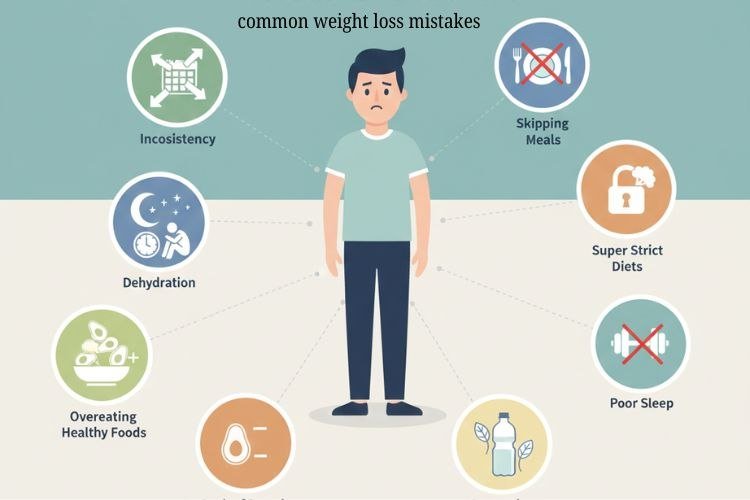
Mistake 1: Skipping Meals
- Why it’s bad: You get too hungry and overeat later
- You should eat 3 meals + 1-2 healthy snacks daily
Mistake 2: Eating Only Salad
- Why it’s bad: No energy, no satisfaction, hard to continue
- You should have balanced meals with grains, protein, and veggies
Mistake 3: Cutting All Fats
- Why it’s bad: Fats are needed for your brain and skin
- You should use small amounts of healthy oils (olive, mustard, groundnut)
Mistake 4: Super Strict Diets
- Why it’s bad: Too hard to follow, leads to quitting
- You should start making small, sustainable changes that you can keep
Mistake 5: No Exercise
- Slower weight loss, weaker muscles, less energy
- You should do 30+ minutes of activity daily (walking is perfect!)
Frequently Asked Questions
Can a balanced diet really help me lose weight?
Yes. A balanced diet naturally cuts extra calories while still giving your body all the essential nutrients it needs. You will feel fuller, have more energy, and be able to lose weight safely.
Can I eat rice while losing weight?
Yes, you can. But choose brown rice or millets, keep portions moderate, and fill most of your plate with vegetables and dal so your overall meal is lighter and more filling.
Is fat completely bad for weight loss?
Not all fat is bad. Your body needs small amounts of healthy fats from nuts, seeds, and vegetable oils. The problem comes from eating too much total fat, especially ghee, butter, and deep‑fried foods.
Can I follow the same diet as anyone else?
Not every time. Everyone is different, and so is the need for everyone. Two people can eat the same foods and lose weight at different rates. Making your plan fit your needs is usually better.
Is fruit safe to eat when trying to lose weight?
Yes. Whole fruits are rich in fiber, vitamins, and water, and they are much better than sweets or sugary drinks. Just avoid overdoing high‑sugar juices and keep portions sensible if you have diabetes.
Are cheat meals okay on a balanced weight‑loss diet?
Occasional small treats are fine if your overall weekly eating is healthy. The problem is turning one treat into a full “cheat weekend.” Enjoy special foods in small amounts and then return to your routine.
How much water should I drink for weight loss?
Most adults do well with about 6–8 glasses a day, more in hot weather or with exercise. Water helps control hunger, replaces sugary drinks, and supports digestion, which indirectly supports weight loss.
Final Thoughts
You don’t have to eat boring or tasteless food or starve yourself to lose weight. A balanced diet gives your body everything it needs to stay healthy, strong, and full of energy. It also helps you lose weight naturally.
Eating various vegetables, whole grains, protein, and healthy fats makes your body feel active, full, and happy. A lot of health experts also say that eating a balanced diet is the most important thing you can do to stay healthy. You don’t need to follow strict rules; you need to make smart food choices every day.
Get started now with small changes.
A balanced plate is the first step on your path to better health.

I now use home remedies like turmeric tea and ginger every day. These simple, plant-based solutions help my body heal itself. Nature gives us all we need to stay healthy, without complicated formulas.