

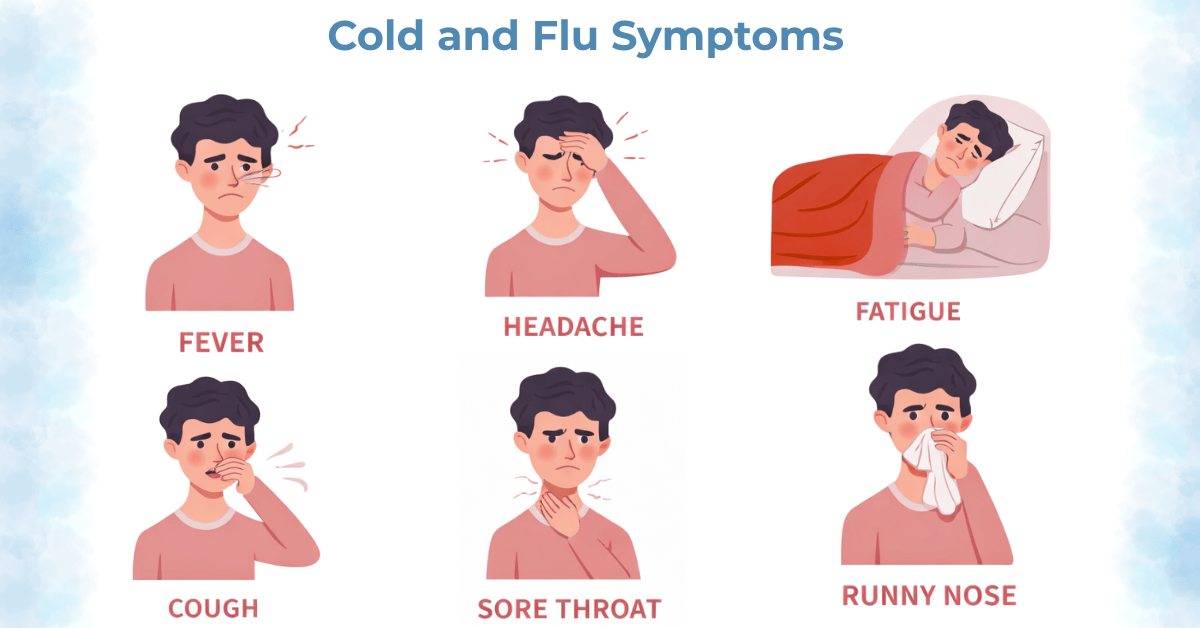
Everyone gets sick sometimes, and two of the most common illnesses are the common cold and flu. Both are viral infections that affect your nose, throat, and lungs. A cold usually feels like a stuffy or runny nose and sneezing, while the flu (influenza) often comes with a higher fever and body aches.
According to the CDC, a cold is a viral infection of the upper respiratory tract that usually lasts less than a week. In fact, an adult gets 2–3 colds per year on average, and children get them more often. Influenza, or the flu, is a viral infection that can make you feel worse than a cold.
In both cases, proper rest, being hydrated, and time are all needed to recover, but it’s important to know about symptoms, causes, prevention, and how to take proper care of yourself. In this blog, we will talk about all these important things in an easy way.
What Causes a Cold and the Flu?
Viruses cause both the cold and the flu. There are more than 200 different viruses that can cause a cold. The most common ones are called rhinoviruses. The flu is caused by influenza viruses. These viruses spread effortlessly. When a sick person coughs, sneezes, laughs, or talks, tiny drops containing the virus come out into the air. These drops can be breathed in by people or fall on nearby surfaces like door handles, tables, or phones, which contributes to spreading.
These viruses enter our respiratory system and start to grow, which is why we start feeling sick. You can get a cold and the flu anytime of the year, but during winter, these are especially common.
You can consider them invisible droplets of germs in the air and on surfaces. Their prevention mainly focuses on blocking those germs by washing your hands properly, covering coughs, and keeping your distance from sick people. All these measures can reduce the risk of getting infected by these viruses.
Cold versus Flu: How Are They Different?
While colds and flu share many common symptoms, they also differ significantly. Generally, the flu strikes you out of nowhere and very hard, while a cold will make you sick slowly and is milder in comparison to the flu. The CDC describes that cold symptoms typically develop slowly over a few days, whereas flu symptoms appear abruptly.
Fever is rare with a cold but is very common and often high with the flu. Body pain and feeling extreme tiredness are usually worse in the flu compared to a cold. Sneezing and a blocked nose are common in a cold, but they don’t happen often in the flu.
In short, if you feel very sick, have a high fever, and suddenly hit the floor, you probably have the flu. But if you just have a runny nose and minor cough, it’s probably just a cold.
Symptoms of a Cold and Flu
| Cold | Flu |
| Runny or stuffy nose | Fever or feeling very feverish/chills |
| Cough | Cough (dry and persistent) |
| Sneezing | Sore throat |
| Sore throat | Runny or stuffy nose |
| Mild headache or body aches | Muscle or body aches |
| Fatigue (feeling tired) | Headache |
| Low-grade fever (usually low, if any) | Extreme fatigue (tiredness) |
| Sometimes vomiting and diarrhea (more common in children) |
The above table shows how a cold and the flu can look similar yet feel different. Cold symptoms usually develop slowly, remain moderate, and improve within 7–10 days with proper rest and care. Flu symptoms hit you suddenly and are much stronger compared to a cold. The flu makes your everyday activities difficult. Knowing about these differences can help you understand what you are going through and decide when you should go to a doctor.
Read Also– What Is Hepatitis B
How to Prevent Colds and Flu
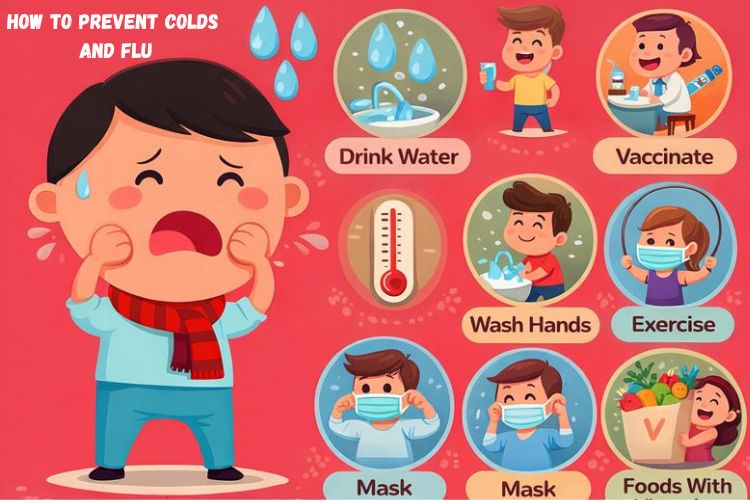
Preventing colds and flu is mostly about keeping germs out of your body. Here are some of the proven steps you can take every day:
- Get a yearly flu shot: Vaccination is the first and most important step to preventing flu. The CDC recommends that everyone 6 months and older get a flu vaccine every year. The flu vaccine won’t protect against colds, but it greatly reduces your chance of getting influenza or serious flu complications.
- Wash your hands often: Use soap and water and scrub for at least 20 seconds. If soap is not available, use a hand sanitizer. Washing hands kills germs you might have picked up by touching surfaces.
- Cover coughs and sneezes: Use a tissue to cover your mouth and nose when you cough or sneeze, then toss it away. If you don’t have a tissue, cough into the inside of your elbow and not your hand. This keeps droplet germs from spreading to other people or surfaces.
- Avoid touching your face: Germs can enter your body through your eyes, nose, or mouth. Try not to touch those areas with unwashed hands. This method lowers the risk of getting germs inside you.
- Keep distance from sick people: As much as possible, stay away from friends or family members who are visibly coughing or sneezing. If you are ill yourself, stay home from work or school (at least until your fever is gone) so you don’t spread illness.
- Clean surfaces: Wipe down frequently touched surfaces (doorknobs, phone, remote, toys) with disinfectant, since viruses can survive there for hours. Also, bringing in fresh air or using a fan/air purifier can reduce germs floating around.
- Healthy habits: Getting enough sleep, staying physically active, eating nutritious meals, and managing stress all help your immune system. While these won’t guarantee you never get sick, a healthy body is better at fighting against infections.
Following these steps year-round can greatly reduce your risk. As the CDC and NHS advise, regularly washing hands and covering coughs can prevent both colds and flu. And remember: the flu shot is safe and free for most people on national programs and can make a big difference each fall and winter.
Home Remedies and Treatment
If you do catch a cold or flu, the good news is that you can still deal with the symptoms at home in most cases. No pill kills cold viruses, and most people recover on their own in a week or two. You should focus on comfort and letting your body fight the infection. Some helpful home remedies and treatments include:
- Rest and slow down: Your body needs energy to fight the virus. Stay home and get extra sleep. Don’t push yourself back to work or school if you’re still feverish or weak.
- Stay hydrated: Drink plenty of water, juice, soup or herbal tea. This helps keep mucus thin and can prevent dehydration (especially if you have a fever).
- Use pain relievers and fever reducers if needed: Over-the-counter medicines like acetaminophen (paracetamol) or ibuprofen can ease fever, headaches, and aches. Always follow the dosing instructions on the label, and don’t give adult medicines to young children unless approved by a doctor. (A pharmacist can help you choose the right medicine.) Do not give aspirin to children under 16, due to rare risks.
- Soothe your throat and chest: Gargling warm salt water can ease a sore throat. A spoonful of honey (in warm tea or lemon-honey water) can soothe coughs and sore throats (but never give honey to babies under 1 year). Throat lozenges or menthol rubs may also help relieve symptoms. Breathing in steam (from a hot shower or a bowl of hot water) or using a clean humidifier can loosen congestion. (Be very careful with steam around children to avoid burns.)
- Use nasal relief if needed: For a blocked nose, a simple saline nasal spray or drops (saltwater solution) can clear stuffiness. For young children, a rubber bulb syringe can gently suction mucus from the nose. Decongestant sprays or drops are available but should be used only for the short term as directed (they can cause rebound congestion if used too long).
- Comfort and safety: Keep yourself warm (a light blanket) and rest. Don’t smoke or let others smoke around you, since smoke irritates the lungs and throat. Eat light, nourishing foods if you have an appetite (chicken soup, for example, is a classic home remedy that can be comforting).
Most colds and mild flu get better without seeing a doctor. You can treat a cold or mild flu at home by doing the above and giving it time. A pharmacist can also recommend safe cold remedies or cough syrups (especially for older kids and adults). Remember that medicines and supplements may relieve symptoms, but they don’t cure the virus. Your immune system is the one that fights the viruses.
In short, listen to your body. If you feel like resting in bed and sipping warm tea, that’s usually the best medicine.
Read Also- Home Readies
When to Seek Medical Help
Most colds and flus are mild, and you recover with proper rest and care. But occasionally you need to see a doctor to recover. Immediately see a doctor if you are experiencing:
- Difficulty breathing or shortness of breath: If breathing feels hard or noisy, or if you get very wheezy, see a doctor right away.
- High fever that lasts: If a baby under 3 months has a fever over 38°C (100.4°F), or an adult has a fever for over 4 days, they need proper medical care.
- Severe dehydration: Very dark urine, dry mouth, crying without tears, or dizziness are the signs of dehydration. If you have these, then you should see a doctor.
- Chest pain or pressure: If you are experiencing chest pain, especially pain that doesn’t go away, or pain with deep breaths, you should definitely speak with a doctor.
- Symptoms that worsen or come back: If you start to feel better and then suddenly much worse, or a cough or fever returns, see a doctor.
- At-risk groups: People such as older adults over 65, pregnant women, or those with chronic conditions like asthma, diabetes, or heart disease should seek medical advice earlier, even if symptoms seem mild. Furthermore, if the patient is very young (especially under 3 months) or elderly, it’s wise to consult a provider sooner.
- Worsening chronic conditions: If you have a chronic lung, heart, kidney, or immune system disease and your symptoms are getting worse, medical attention is needed.
If any emergency warning signs appear, such as blue lips (in children), inability to stay awake, repeated vomiting, or seizures, get urgent care (call emergency services) immediately. Because flu can be serious in some cases, doctors may prescribe antiviral medications (like oseltamivir) if you are at high risk or very sick, especially if started within a couple of days of symptoms. But for most of us, rest and home care will do.
Key Points to Remember
- Cold and Flu: A cold usually attacks slowly with a runny nose and sneezing, but the flu attacks fast and suddenly with a high fever, aches, and extreme tiredness.
- Prevention: It is important to cover your cough, wash your hands more often, avoid touching your face, and maintain a safe distance from sick people. Get an annual vaccination, especially if you are a child or an older adult.
- Home Care: Simple and safe home remedies like warm soups, honey tea, gargling warm salt water, and resting can be effective.
- Watch for trouble: You should call a doctor right away if you have a hard time breathing, a very high temperature that hasn’t gone down for a long time, or if your symptoms suddenly get worse.
Frequently Asked Questions
1. What causes colds and the flu?
Viruses cause both colds and the flu. Different viruses can cause the common cold, while influenza is the virus that causes the flu.
2. How do colds and the flu spread from person to person?
Colds and flu can be spread through the air when someone coughs, sneezes, or talks. You can also become infected by touching surfaces that have germs and then touching your eyes, nose, or mouth.
3. How long does a cold usually last?
A common cold usually lasts 7 to 10 days. Symptoms are strongest in the first few days and then slowly start to improve.
4. Can a cold turn into the flu?
No. A cold cannot turn into the flu. Although colds and the flu are caused by different viruses, having a cold can weaken your body and increase the likelihood of catching the flu.
5. What should I drink when I have a cold and the flu?
Drink plenty of water, warm soups, herbal teas, milk, ORS, and fresh fruit juices. Drinking more fluids prevents dehydration and helps reduce congestion.
6. Why do colds and the flu make you feel tired?
When you have a cold or the flu, your body is always fighting the virus. This condition makes you fatigued and weak, which implies your body needs more sleep. So, it’s important that you get proper rest.
7. Are colds and flu dangerous?
Normally, a cold is mild and doesn’t require medical attention, but the flu can be serious sometimes, especially for young children, older adults, pregnant women, and people with weak immunity.
Final Conclusion
Colds and flu are very common illnesses, but they don’t have to control your way of life. With time and proper knowledge, you can get relief from colds and flu. The simplest and most effective approach is to use modern medication, such as flu vaccination, with healthy habits such as frequent hand washing, adequate rest, healthy eating, and staying hydrated.
When you understand your body’s reaction, like a fever or a blocked nose, it becomes simple to stay calm and take the right steps. While a cold can usually improve by itself within 7–10 days, the flu can sometimes require proper medical attention.
Start following the prevention tips given above and protect yourself from future risk of getting a cold and the flu.
