

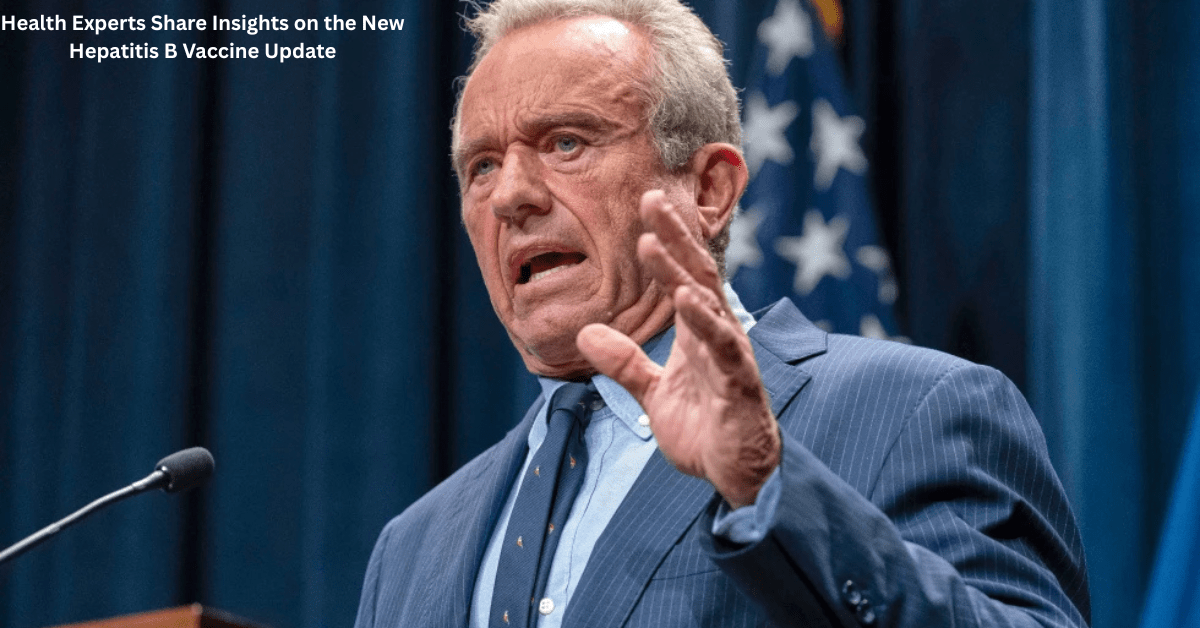
HHS Secretary Robert F. Kennedy Jr.’s Vaccine Advisory Panel Delays Vote on Newborn Hepatitis B Shot Timing
Introduction
In a move that could reshape decades-old immunization policy in the United States, the vaccine advisory panel appointed by HHS Secretary Robert F. Kennedy Jr. has delayed a vote on whether to change the recommended timing of the first dose of the hepatitis B vaccine for newborns. The decision comes amid heated debate, scientific scrutiny, and concerns from medical experts over possible consequences for infant health.
The proposal under consideration would end the long-standing recommendation that all medically stable newborns receive the first hepatitis B vaccine within 24 hours of birth. For infants born to mothers who test negative for hepatitis B, the recommendation could shift to a “shared decision-making” model — allowing parents and physicians to decide whether to vaccinate at birth or delay the first dose until later (in some scenarios, at least two months old).
But at a meeting this week, the panel postponed its vote, citing procedural confusion and ambiguity in the proposed language — a delay that reflects the controversy and internal divisions over the proposed change.
This article explores what’s at stake, why the advisory panel is considering this change, the arguments for and against it, and what this could mean for public health moving forward.
Background: The Hepatitis B Vaccine & Newborn “Birth Dose”
What is hepatitis B and why vaccinate at birth?
Hepatitis B is a viral infection that attacks the liver and can lead to both acute illness and chronic disease, including cirrhosis and liver cancer later in life. The virus is spread through contact with infected blood and certain body fluids — including from mother to child during childbirth.
To prevent perinatal (mother-to-child) transmission and early-life infection, public health agencies worldwide have long recommended that infants receive their first dose of hepatitis B vaccine immediately after birth — typically within 24 hours. This “birth dose” is followed by two or more additional doses to complete the vaccine series.
When universal newborn vaccination began in 1991 in the United States, it marked a major public health advance. Since then, decades of data have shown that early vaccination dramatically reduces the risk of chronic hepatitis B infection and its life-long complications.
Internationally, the World Health Organization (WHO) continues to recommend that all infants receive their first dose as soon as possible after birth — ideally within 24 hours. If that is not feasible, the first dose should be given at the first contact with health services, ideally within the first few days.
Why the “birth dose” matters
The rationale for the birth dose is twofold:
- Prevent perinatal transmission: Infants born to mothers with undiagnosed or undisclosed hepatitis B can contract the virus during childbirth. Early vaccination — ideally within hours of birth — offers the best protection.
- Maximise long-term protection: A full vaccine series beginning at birth ensures earlier immunity and reduces the lifetime risk of chronic infection, liver disease, and cancer. The birth dose serves as the first, critical line of defense.
Because of these benefits, the “birth dose + follow-up doses” schedule has been standard in many countries, including the U.S., for decades.
What Changed: The New Vaccine Panel and Proposed Rewrite
Who is the advisory panel
The group considering changes is the Advisory Committee on Immunization Practices (ACIP), the U.S. panel that guides immunization policy for the Centers for Disease Control and Prevention (CDC). Earlier in 2025, HHS Secretary Robert F. Kennedy Jr. replaced the existing ACIP membership with a handpicked panel — a move that has sparked concern in the medical community because some of the new appointees have a history of skepticism about certain vaccination policies.
The proposal under consideration
Under the new proposal, the long-standing universal recommendation for a hepatitis B “birth dose” for all newborns would be rescinded. Instead:
- Newborns whose mothers test positive for hepatitis B — or whose status is unknown — would still receive the first dose soon after birth.
- For infants whose mothers test negative, vaccination would become optional: parents, together with their health care provider, would decide whether to vaccinate at birth.
- If parents opt to delay vaccination, the first dose would not be given earlier than two months of age — likely as part of a standard multi-dose series.
The change would represent a major policy shift after more than three decades of universal newborn immunization for hepatitis B in the U.S.
The Delay: Why the Vote Was Postponed
At the ACIP meeting this week, the committee initially attempted to vote on the proposal. However, the vote was delayed. According to official statements from the panel, the postponement was due to “confusion” over the voting language and concerns that multiple versions had been circulated to members shortly before the scheduled vote — undermining confidence in the procedural clarity of the vote.
This delay reflects deeper tensions within the newly constituted ACIP. Some members reportedly support the rewrite, while others — including traditionally pro–vaccination physicians — have expressed alarm at the public health implications of removing a universal birth dose recommendation.
One of the dissenting voices, pediatric infectious disease specialist Cody Meissner, warned that postponing the vaccine could “increase the risk of harm based on no evidence of benefit,” arguing that delaying the dose undermines decades of success in reducing hepatitis B infections.
Expert Concerns: Safety, Effectiveness, and Public Health Risk
Vaccine safety and timing
Supporters of the current birth-dose policy point to a robust body of scientific evidence showing the hepatitis B vaccine is safe and effective, regardless of timing. According to a review by the non-profit Vaccine Integrity Project — which examined nearly 400 studies spanning 40 years — there is no compelling evidence that delaying the first dose improves safety. In fact, changing the timing may reduce protection without providing any clear benefit.
Furthermore, major health organizations that have long supported the birth-dose policy argue that the proposed shift could undermine trust in immunization programs and sow confusion among parents.
Risk of increased infections
Public health experts warn that delaying or making optional the newborn hepatitis B dose could lead to a resurgence in early-life infections. Babies whose mothers test negative — but whose status might have been incorrectly recorded — or whose mothers were never tested — may remain unprotected during a vulnerable period.
The universal birth-dose policy, critics argue, serves as a safety net to protect infants in whom maternal infection has gone undetected. If that net is weakened, the risk of chronic hepatitis B — with its lifelong consequences — could increase at a population level.
Impact on vaccine coverage and public trust
Shifting to a parent/doctor decision model may lead to uneven coverage. Some parents may choose to delay or skip the vaccine entirely, either due to hesitancy, distrust, or logistical issues. That could erode decades of progress in nearly eliminating childhood hepatitis B in many communities.
Moreover, public health experts caution that this change could fuel broader vaccine skepticism. The fact that the advisory panel was reshuffled — and now includes individuals with documented vaccine-critical stances — raises questions about whether science or ideology is driving policy.
Defenders of the Change: Arguments for Flexibility
Proponents of the proposed rewrite argue that the “one-size-fits-all” birth-dose approach may be overly broad, particularly for infants born to mothers who have tested negative for hepatitis B. Some key arguments include:
- Reducing unnecessary medical intervention: For low-risk infants — especially those of mothers who test negative — some believe it may be reasonable to delay vaccination, or treat vaccination as optional. The shift could offer more flexibility, especially in contexts where parents have concerns about administering vaccines immediately after birth.
- Encouraging informed, individualized decision-making: The new “shared decision-making” model might empower parents and healthcare providers to assess risk and benefits on a case-by-case basis rather than follow a blanket recommendation.
- Addressing concerns about vaccine ingredients or cumulative dosing: Some on the new panel have raised questions about vaccine components (such as adjuvants) and the timing or accumulation of doses in infants — concerns that, while not supported by strong evidence, reflect a growing segment of vaccine-hesitant parents.
Supporters say that offering a delayed timeline — rather than mandatory newborn vaccination — may respect parental choice without jeopardizing safety, especially if the vaccine can be administered later in infancy.
What Public Health Experts Are Saying
Since the ACIP’s recent activity became public, several major health organizations and public health experts have strongly criticized the potential change.
The American Academy of Pediatrics (AAP), for example, issued a statement condemning the rewrite: they argued that the proposed shift is “irresponsible,” could sow fear and distrust, and lacks any new evidence warranting such a change. The AAP emphasized that there is “no new or concerning information about the hepatitis B vaccine that is prompting this change.”
Other experts warn that a policy change before robust public discussion and data review could undo decades of progress. They note that infants unprotected or partially vaccinated could represent a vulnerable population at risk for liver disease, chronic infection, and long-term lost trust in vaccines.
An independent review by the Vaccine Integrity Project — prompted in part by the proposed changes — concluded that there is “no safety benefit” to delaying the first dose. Instead, they warned only of potential increased risk: “changing the schedule creates risk without benefit.”
Dr. Meissner, one of the dissenting panel members, warned that if the birth dose recommendation is removed, fewer children will receive the vaccine — especially since birth in a hospital setting is often the most reliable opportunity for that first dose. Delaying the vaccine could increase the likelihood of missing early vaccination altogether.
Why It Matters (Globally and Locally)
Global context
Globally, early vaccination — including a timely birth dose — remains the cornerstone of efforts to eliminate hepatitis B. The WHO’s guidance reflects the view that the birth dose is critically important to prevent perinatal transmission, especially in regions with limited prenatal screening or variable maternal testing.
Shifting away from a universal birth dose in a major country like the United States could influence policies elsewhere. It might embolden other nations’ health authorities to adopt similar “individual-decision” models or delay-first-dose strategies — potentially undermining global efforts to eliminate new chronic hepatitis B infections.
Implications for trust in vaccines
Vaccination policies are not just about medical science — they also shape public perceptions and trust in health institutions. Critics worry that the policy shift under a politically appointed, controversial panel could erode confidence in decades-old, evidence-based immunization programs. Such a precedent may embolden vaccine hesitancy or skepticism.
Potential risk of increased infections
If implemented, the change could lead to real-world increases in hepatitis B infections among infants — particularly those born to mothers whose hepatitis B status is unknown, incorrectly documented, or who decline to vaccinate. That could result in more cases of chronic hepatitis B, putting future generations at higher risk of liver disease, cirrhosis, and hepatic cancer.
What’s Next: The Future of the Decision
As of now, the advisory panel has postponed its vote. The delay is not a withdrawal — but a pause. According to reports, the vote has been rescheduled and is expected soon, though the exact timing remains unclear.
Meanwhile, independent groups are reviewing decades of data on hepatitis B vaccination to assess whether a delayed schedule could make sense.
Medical organizations, public health experts, and pediatricians are urging caution. They have called for transparent discussions, consultations with scientific experts, and greater consideration of the long-term consequences before recommending such a fundamental change in infant immunization strategy.
In short — this debate is far from over. But its outcome could define the future of a generation’s protection from hepatitis B, and potentially reshape immunization policy more broadly.
Conclusion
The postponement of the vote by the vaccine advisory panel under HHS Secretary Robert F. Kennedy Jr. marks a critical moment in U.S. immunization history. For over 30 years, giving the first dose of the hepatitis B vaccine within 24 hours of birth has been a foundational public health practice, credited with drastically reducing early-life chronic hepatitis B infections.
Now, that practice is under review. The proposed shift — to rely on parental choice and doctor-patient decision-making for infants born to hepatitis B–negative mothers, with the first dose possibly delayed until two months of age — raises major questions about public health, vaccine safety, and long-term disease prevention.
Experts warn that the change could lead to increased risk of infection, erode trust in vaccination programs, and undercut decades of progress. Defenders of the proposal argue it introduces flexibility and parent choice.
Ultimately, the decision before the panel is not just about the timing of a vaccine — it is about the balance between individual choice and collective health, between flexibility and safeguarding decades of progress. As the vote approaches, the world will be watching.
Disclaimer
This article is written for informational and educational purposes only and should not be considered medical advice. Always consult a qualified healthcare professional before making any decisions about vaccinations, treatments, or health concerns. The information presented here is based on extensive research gathered from reputable and authoritative sources, including the CDC, WHO, Hepatitis B Foundation, American Academy of Pediatrics (AAP), FactCheck.org, and multiple verified health news organizations. While every effort has been made to ensure accuracy, medical guidelines and recommendations may change over time. The authors and publisher of this article are not responsible for any actions taken based on the content provided.
Author
Bio:
Dr. Jonathan Reid, PhD
Epidemiologist and Senior Research Analyst focusing on vaccine safety, CDC guidelines, and global health data.
