

Introduction
Blood sugar, or glucose, is the amount of sugar present in your blood at all times. Blood sugar, or glucose, serves as fuel for your body and is a key element in producing the energy necessary for your body to function properly. However, if your blood sugar increases for a long period of time, it can cause serious health issues. This condition is known as high blood sugar and, in medical terms, hyperglycemia.
But the good news is that there are easy and safe methods to lower blood sugar levels. This short guide will help you learn how to reduce your blood sugar levels immediately using procedures that are advised by the best health organizations in the world.
How Blood Sugar Works in Your Body
Before you learn how to reduce blood sugar immediately, you need to know about how your body’s energy systems work. Your body is like a car that needs fuel (energy) to run, just like a car needs petrol. For your body, that fuel is glucose, which is a type of sugar derived from foods such as rice, bread, fruits, and vegetables.
How Does It Work?
- Sugar (glucose) is the fuel that powers the engine.
- This fuel is carried through your blood, just like fuel flowing through fuel lines.
- But fuel can’t power the engine unless it gets inside properly.
- When you eat, sugar enters the blood.
- Your blood sugar level starts to go up.
- The pancreas, a small organ, releases insulin.
- Insulin plays an important role in opening the fuel valve.
- Sugar enters the cells and starts converting into energy.
- With this, your blood sugar goes back to normal.
Why This Matters
When there isn’t enough insulin, or it doesn’t act well, sugar builds up in the blood instead of entering the cells. This raises your blood sugar levels. High blood sugar can hurt the heart, eyes, kidneys, and nerves over time. This is why maintaining healthy blood sugar levels is crucial for keeping your body healthy and energized.
Quick Ways to Reduce Blood Sugar Levels Immediately
1. Move Your Body: Get Active Right Now
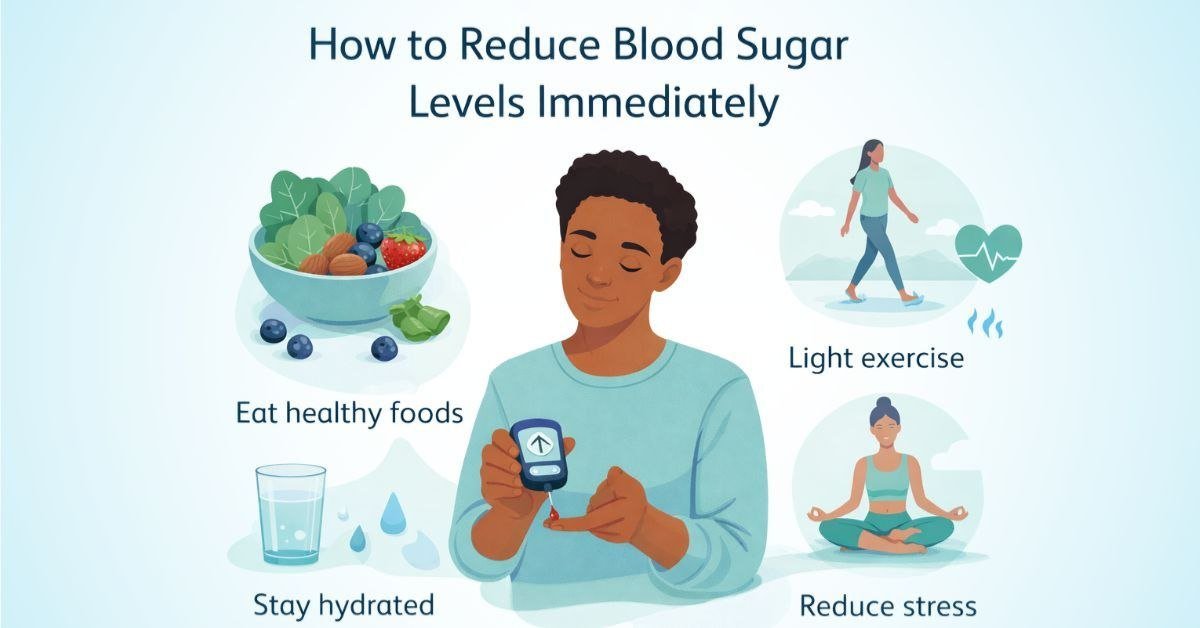
This method is one of the fastest ways to reduce blood sugar levels. When you exercise, your muscles use glucose for energy production, taking it directly from your bloodstream. Studies have shown that even just 10-15 min of walking after eating can significantly balance your blood sugar levels for the next 24 hours.
Easy activities you can do:
- Take a brisk walk for 10-20 minutes
- Do light housework, like cleaning or cooking
- Go shopping with family and friends
- Dance to your favorite music
- Use the stairs instead of the elevator every time
- Do simple stretching exercises daily
- Play outdoor sports you like
Important note: If your blood sugar is extremely high, like above 240 mg/dL, you should speak with your doctor before exercising, as it could sometimes make things worse.
2. Drink Water and Stay Hydrated
Your body needs water to work properly. When you’re dehydrated, sugar becomes more concentrated in your blood. Drinking water helps your kidneys flush out extra sugar through urine and balance your blood sugar levels.
How to do it:
- Drink a glass of water right now
- Keep drinking water throughout the day
- Drink 6–8 glasses of water a day
- Drink plain water instead of sugary drinks
Why water, not juice? Juice and soda have added sugar, which will make things worse. Try to drink plain water, tea without sugar, or coffee without sugar.
3. Eat Foods with a Low Glycemic Index (Low GI)
The Glycemic Index (GI) is a number that tells you how quickly food raises your blood sugar. Foods with low GI release sugar slowly, which prevents sudden sugar spikes.
Best low-GI foods to eat right now:
| Food Category | Best Choices |
| Vegetables | Spinach, broccoli, cauliflower, cucumber, bell peppers, tomatoes, and leafy greens |
| Fruits | Apples, oranges, pears, guava, berries, but avoid bananas, mangoes, and grapes |
| Grains | Brown rice, whole wheat bread, oats, and barley |
| Proteins | Eggs, chicken, fish, lentils, beans, and yogurt |
| Nuts | Almonds, walnuts, and peanuts (unsalted) |
How to eat smart:
- Eat vegetables first, then protein, and then carbohydrates
- This slows down sugar absorption in your blood
- Combine carbs with protein, for example, bread with eggs
- Choose whole grains instead of white rice or white bread
4. Add More Fiber to Your Meals
Fiber slows down sugar like a speed bump. It slows down the sugar so it doesn’t get into your blood all at once. Eating foods high in fiber helps keep your blood sugar stable and calm.
Best fiber-rich foods:
- Whole grains such as brown rice, oats, and whole wheat
- Green leafy vegetables such as spinach, lettuce, and kale
- Lentils and beans
- Apples and pears with skin on
- Carrots and broccoli
Easy way to add fiber:
- Sprinkle seeds on your salad
- Eat fruits without removing the skin
- Have lentil soup for lunch
- Snack on roasted chickpeas instead of harmful chips
5. Control Your Portion Sizes
Eating too much of anything, even healthy food, can be harmful to your blood sugar.
Use the plate method:
- ½ plate of vegetables
- ¼ plate protein (meat, beans, eggs)
- ¼ plate carbohydrates (rice, bread, potatoes)
Smaller portions mean smaller sugar spikes.
6. Manage Stress and Get Better Sleep
When you’re stressed or don’t sleep well, your body releases chemicals that increase blood sugar. When you relax and rest properly, your body, including your pancreas, can work more smoothly and keep blood.
Simple stress-busting activities:
- Take deep breaths
- Do yoga or meditation
- Listen to calming music
- Spend time in nature
Better sleep tips:
- Go to bed at the same time every night
- Avoid phones 30 minutes before sleep
- Keep your room cool and dark
- Get 7-9 hours of sleep
Foods and Drinks to Avoid
If you want to reduce blood sugar, stay away from:
| Avoid These | Why |
| Sugary drinks | Soda, juice, sweet tea, and energy drinks increase sugar instantly |
| Sweets | Candy, chocolate, ice cream, cakes, and cookies |
| White bread and rice | They digest too fast and increase sugar quickly |
| Fried foods | Extra fat slows digestion, but oily foods aren’t healthy |
| Processed foods | Hidden sugars in ketchup, salad dressing, and yogurt |
| Honey, jaggery, and maple syrup | Concentrated sugars |
| Ripe bananas, mangoes, and grapes | These are high-sugar fruits |
| Alcohol | Can dangerously lower blood sugar |
Timing Matters: When to Eat and Exercise
Smart eating schedule:
- Never skip your meals
- Eat at regular time intervals
- Don’t have long gaps between meals; try to eat every 3 hours
- Small, frequent meals are better than one big meal at once
Best exercise timing:
- The best time is within 10-15 minutes after finishing a meal
- Walk slowly for at least 15 minutes
- This prevents a blood sugar spike right after eating
When to See a Doctor: Important Warning Signs
If you are experiencing:
- Extreme thirst, like drinking water constantly
- Frequent urination more than usual
- Blurred or tunnel vision
- Extreme tiredness; can’t even do normal activities
- Nausea or feeling sick
- Fruity-smelling breath (sign of a serious condition)
- Confusion or difficulty concentrating
- Blood sugar above 240 mg/dL with symptoms
These signs indicate that you should see a doctor or call the hospital right away.
A Simple Daily Plan to Keep Blood Sugar Healthy
Morning (Within 30 minutes of waking):
- Drink a glass of water
- Have a breakfast with fiber and protein, like oats with eggs, or whole grain bread with chickpeas
- Take a walk for 15 minutes after breakfast
Mid-Morning Snack:
- Apple with a handful of almonds
- Or whole-grain crackers with hummus
Lunch (12-1 PM):
- ½ plate with vegetables
- ¼ plate with protein such as lentils, beans, or chicken
- ¼ plate with whole grains such as brown rice or wheat roti
- Take a walk of 10-15 minutes after eating
Afternoon (3-4 PM):
- Drink water
- Herbal tea (without sugar)
- Light snack if hungry (vegetable sticks or fruit)
Evening (5-6 PM):
- Light yoga or stretching for 20 minutes
- Any stress-reduction activities you like
Dinner (7-8 PM):
- Like lunch, have vegetables + protein + whole grains
- Take a walk for 10 minutes afterward
- Avoid heavy, oily foods for dinner
Before Bed:
- Drink warm milk (unsweetened) or herbal tea
- Do relaxation breathing
- Get to bed at the same time every day
Words You Should Know
| Medical Term | Simple Meaning |
| Blood Glucose | Sugar in your blood |
| Hyperglycemia | Too much sugar in the blood (high) |
| Hypoglycemia | Too little sugar in the blood (low) |
| Insulin | Hormone that helps cells use sugar |
| Insulin Resistance | Body doesn’t respond to insulin properly |
| Glycemic Index (GI) | Number showing how fast food raises blood sugar |
| HbA1c | Test showing average sugar over 3 months |
| Pancreas | Organ that makes insulin |
| Glucose Tablets | Quick sugar tablets for emergencies |
| Ketones | Dangerous chemicals made when sugar very high |
Real Tips from Real Experience
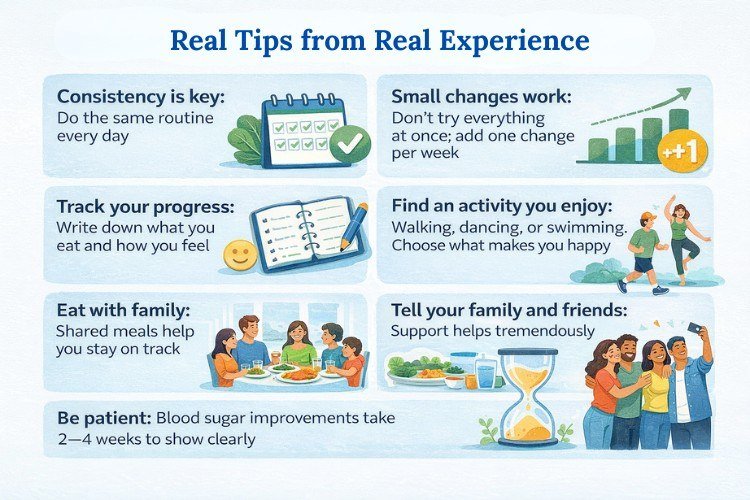
What actually works according to thousands of patients:
- Consistency is key: Do the same routine every day
- Small changes work: Don’t try everything at once; add one change per week
- Track your progress: Write down what you eat and how you feel
- Find an activity you enjoy: Walking, dancing, or swimming. Choose what makes you happy
- Eat with family: Shared meals help you stay on track
- Tell your family and friends: Support helps tremendously
- Be patient: Blood sugar improvements take 2-4 weeks to show clearly
Frequently Asked Questions
Why is high blood sugar harmful?
If your blood sugar remains high for a long period of time, it can slowly harm your eyes, kidneys, heart, and nerves and affect your overall lifestyle.
How can I reduce my blood sugar quickly?
By taking a 10–20 minute walk, drinking water, avoiding sugary or high-carb foods, and taking your prescribed diabetes medication or insulin as directed by your doctor, you can help reduce your blood sugar levels quickly.
What is a low-GI food?
Low GI foods are those that raise your blood sugar slowly. Foods such as oats, brown rice, whole wheat roti, and most vegetables are some of the examples.
Why is sleep important for blood sugar?
Getting good sleep regularly helps your body to use insulin better, which is important to keep your blood sugar levels in a healthy range.
What is hypoglycemia?
Hypoglycemia means low blood sugar. In this condition, your blood sugar drops so much that it affects all your bodily functions. It can make you shaky, sweaty, dizzy, or confused.
When should I see a doctor?
Immediately see a doctor if your blood sugar level stays high and you experience extreme thirst, pee a lot, have blurred vision, or feel fragile.
Can children also have high blood sugar?
Yes, children can also get high blood sugar and diabetes, so healthy food choices and a healthy lifestyle are important.
Final Thoughts
Blood sugar issues can be scary, but they’re manageable if you have proper knowledge about them. Every day, millions of people worldwide successfully manage their blood sugar through a variety of methods, some of which this blog discusses.
The most important thing is that you start immediately, from today on. Choose one thing from this guide and start doing it. It could be a 15-minute walk after lunch tomorrow. It could be drinking water instead of soda. It could be adding one vegetable to dinner.
Every small step leads to big results.

I now use home remedies like turmeric tea and ginger every day. These simple, plant-based solutions help my body heal itself. Nature gives us all we need to stay healthy, without complicated formulas.