

For a long time, I thought metabolism was just about weight loss. Honestly, that’s what most of us are told. Burn more calories, lose more weight—simple, right? But after years of digging into home health remedy and actually paying attention to how the body works, I learned that metabolism is way more important than I ever realized.
Your metabolism is basically running the show behind the scenes. It affects how you produce energy, how your hormones stay balanced, how your cells repair themselves, and even how your body handles inflammation as you get older. A real metabolism booster isn’t just about shrinking your waistline—it’s about helping your body use energy better so you don’t feel tired, foggy, or drained all the time.
One thing that really opened my eyes was learning how much muscle, thyroid health, and mitochondrial function matter. I came across studies showing that adding just 1 kilogram of lean muscle can help your body burn an extra 50 to 100 calories a day—even while you’re asleep. That’s when it clicked for me: metabolism isn’t about dieting harder, it’s about supporting your body the right way.
In this guide, I’m going to break down why metabolism naturally slows down over time and share practical, natural ways to wake it back up. Not extreme stuff—just smart, realistic changes that can help you feel more energized, manage your weight, and stay healthier as the years go by.
What Is a Metabolism Booster?
Food, exercise, lifestyle, and supplements that increase your metabolism are all ways to improve the way your body turns calories into energy, and are known as metabolism boosters. This is not just for weight loss, but also to have increased energy and better hormone balance, muscle preservation, and overall body function.
A good metabolic booster will help you
- Have more energy.
- Burn fat efficiently.
- Help balance hormones naturally.
- Protect your muscles as you age.
- Improve your health.
When you use metabolism boosters, it is like tuning up the inside of your body, so every calorie will work harder and give you the energy you need every day.
Read What Is a Metabolism>>
Factors Affecting Your Metabolic Rate
Your metabolism is controlled by several interconnected systems in the body, not just by how many calories you eat. When these systems work well together, your body produces steady energy and burns fat efficiently. When they don’t, metabolism slows down-even with the same diet.
Key factors that influence metabolism include:
- Muscle-to-fat ratio: Muscle is a tissue that uses much more energy than fat, even while at rest. Thus, strength training increases the number of calories burned even when not active, thereby increasing metabolism.
- Mitochondrial Efficiency: Mitochondria produce energy for your body. When they work efficiently, your body utilizes food to create energy rather than storing it as fat.
- Thyroid Hormone Activity (T3 & T4): These hormones play a role as a Thermostat for your Metabolism by determining the rate at which your body burns energy throughout the day.
- Insulin Sensitivity: Good insulin sensitivity allows your body to use glucose for energy, while poor insulin sensitivity results in fat storage and low levels of energy.
- Balance of your Nervous System: Chronic stress puts your Body in ‘Survival mode’, thus decreasing energy expenditure and slowing down metabolism.
Lifestyle Habits That Slow Metabolism
Many common daily habits quietly reduce metabolic efficiency. Over time, these habits signal the body to save energy instead of burning it, leading to low energy levels and stubborn fat gain.
Crash Dieting
Restraining caloric intake creates a deficiency for extended periods, compelling the body into a ‘survival’ state. The resultant decline of metabolism renders it more difficult to burn fat over time.
Processed Foods
Consuming ultra-processed food products creates an imbalance in blood sugar and makes it difficult for the digestive system to absorb nutrients. This impacts the body’s ability to convert food into energy and increases the body’s capacity for fat accumulation.
Chronic Stress
Prolonged periods of heightened levels of cortisol contribute to the accumulation of abdominal fat, suppress thyroid function, and hinder fat-burning activities.
Poor Sleep
Decreased quantity and quality of sleep impact feelings of hunger and metabolism. When a person is poorly rested, they are likely to experience increased cravings for carbohydrates and reduced energy levels. Low-quality sleep also has an adverse impact on metabolism.
Sedentary Lifestyle
Many people spend the majority of their day in sedentary positions, resulting in lower levels of muscle activity compared to persons who maintain their activity levels throughout the day, therefore resulting in lower metabolic rates.
Blood Sugar Spikes
Increased consumption of refined sugars and other refined food products leads to an increase in insulin levels. An increase in insulin creates a propensity for the body to store excess energy as fat, rather than using that energy to fuel the daily needs of the body.
Long-Term Effects on Metabolism
As the above-listed behaviours continue, the metabolic system will become adaptive to function at a lower rate than what is required by the body to survive. This results in lowered energy levels and a decreased capacity to burn fat.
Common Signs of a Slow Metabolism
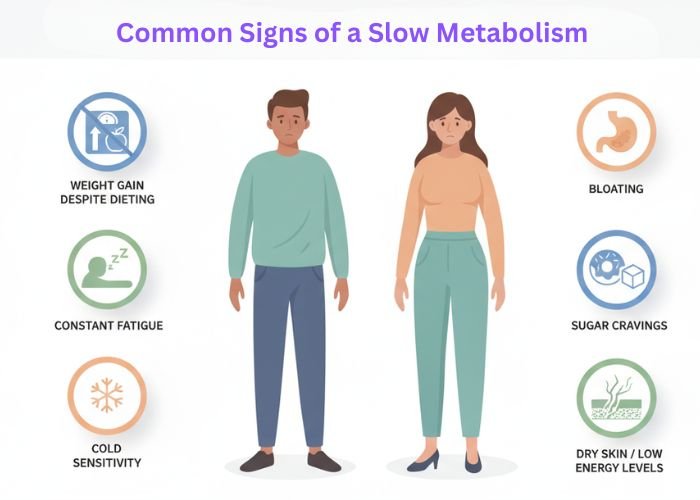
A metabolism that is functioning inefficiently often does not just manifest itself because of increased body weight.
Many of the signs of a slowing metabolic rate can be subtle and often overlooked. Some common signs of slow metabolism are:
- Increased levels of fatigue
- Fat accumulation in the abdominal region
- Abdominal discomfort and slow digestion
- Increased sugar and/or caffeine cravings
- Poor blood flow to the hands and feet
- Reduced recovery time after exercise
- Signs Related to Hormonal Imbalance.
How Metabolism Boosters Work?
Unlike stimulant-based “fat burners” that only provide a short-lived energy spike, a real metabolism booster works deeper, at the cellular and hormonal level. Instead of forcing the body to burn calories, it improves how efficiently energy is produced, used, and sustained throughout the day.
Improved Cellular Energy
Supports healthy mitochondrial function so cells create consistent, usable energy. When energy production improves, the body is less likely to store excess calories as fat.
Better Hormone Signaling
Helps regulate key hormones that control metabolism, appetite, mood, and energy levels, allowing the body to function in a more balanced and efficient way.
Improved Insulin Response
It helps insulin work better, which means the body can utilise glucose for energy instead of converting it into fat. This also helps with appetite and improves your energy levels.
Muscle Preservation
Supports lean muscle mass, which plays a major role in keeping metabolism active even at rest. More muscle means higher daily energy burn.
Efficient Fat Use
Encourages the body to access and burn stored fat as a steady fuel source rather than relying on quick energy spikes.
Long-Term Metabolic Support
By fixing how your metabolism works at the core, this approach helps you maintain steady energy, better fat burning, and long-term health without quick or temporary fixes.
How Exercise Helps Boost Metabolism?
Exercise plays an important role in calorie burning and enhancing our metabolism. Exercise also helps put your body into Ketosis, where fat is used as a source of energy for continuing the body’s everyday processes.
1. Resistance exercise: These exercises play a very important role in building lean muscle tissue. It helps in burning up to 50-100 extra calories per kg even when the body is in resting mode.
Examples: Deadlifts, squats, push-ups, bench presses, and dumbbell rows.
2. Short HIIT Sessions: Short bursts of intense exercise, called high-intensity interval training (HIIT), increase the number of mitochondria in your cells, which makes them better at using oxygen. Also, brief spurts of hard exercise burn far more energy.
Examples: 30-second sprint, burpees, jump squats, and kettlebell swings.
3. NEAT Movement: Walking, standing, and stretching are among non-exercise activities that might help you burn an extra 200 to 500 calories a day. In some situations, they may even burn more calories than regular moderate-intensity cardiovascular activity.
Examples: Cleaning the home, using the stairs, walking on the phone, and minor stretching.
How Hormones Affect Metabolism?
Poor sleep and chronic stress can lower your metabolism, even though you may have a well-balanced diet or exercise program. When you have either of these two issues, they will influence the way that energy is produced, how fat is stored, and the balance between hormones in the body.
- Low Sleep: It lowers leptin, the hormone that tells you you’re full, which might make you want to eat more and more. Adults who sleep fewer than 6 hours a night are up to 20% more likely to gain weight.
- High Cortisol: Chronic stress raises cortisol, which encourages fat storage, especially around the belly, and slows metabolic rate.
- Thyroid Suppression: Prolonged stress can reduce thyroid hormone activity, lowering energy levels and metabolism.
A complete metabolism-boosting approach always includes stress management techniques like meditation, breathing exercises, or yoga, and ensuring 7-9 hours of quality sleep each night to support long-term metabolic health.
Metabolism Booster Foods
Certain foods do more than just provide calories-they improve how your body produces and uses energy, supporting metabolism at a cellular level.
Eggs: Choline, found in eggs, is key to fatty metabolism, liver health, and it is one of nature’s richest sources.
Fermented Foods: Fermented foods such as yogurt, kimchi, sauerkraut, and other types of fermented foods can help improve metabolic health via positive support of gut bacteria, and have a positive effect on Crohn’s disease.
Berries: Blueberries, strawberries, and raspberries are high in polyphenols that enhance insulin sensitivity and reduce fat storage.
Ginger & Turmeric: Helps lower inflammation in the body, allowing your body to use energy more efficiently.
Leafy Green Vegetables: Spinach, kale, broccoli; provide micronutrients to support enzymes and produce energy.
Lean Protein Sources: Turkey, fish & chicken all help increase the thermogenic effect of food consumption by burning more calories while digesting.
Nuts & Seeds: Almonds, walnuts, chia & flaxseed are excellent sources of healthy fats that are vital for the production and balance of hormones, which affects overall metabolic health.
Green Tea: Contains an active compound known as EGCG that increases the rate of fat oxidation by about 10-15%.
Whole Grains: Oats, quinoa, brown rice; provide fiber & slow-release carbohydrates, which help maintain stable blood sugars and support thyroid function.
How Aging Affects Metabolism After 35 and 40?
As we get older, our bodies’ metabolisms become less efficient. Metabolism declines with age due to three primary reasons:
- Loss of muscle mass: The more muscle you have, the more calories your body burns while you’re at rest.
- Hormone levels decrease: Thyroid, estrogen, and testosterone are all hormones that affect your body’s metabolism.
- Increased insulin resistance: Insulin is used by the body to use glucose, but when insulin is not working properly, it is difficult for our bodies to use glucose effectively, and instead, we store fat.
Eating less is not the solution to a declining metabolism; instead, we need to eat better, including meals that are high in protein, perform strength training exercises to maintain muscle mass, and allow ourselves time for rest and recovery.
How to Boost Your Metabolism Naturally?
1. Eat and cycle protein – Eating protein-rich foods will help fuel your metabolism; cycling moderate to higher amounts of protein on alternate days will help also keep your metabolism responsive.
2. Time your carbohydrates – Eating carbohydrates before or shortly after a workout will help you refuel your body for energy and support the recovery of your muscles, while balanced hormones play an important role in this process as well.
3. Include healthy fats – Consuming fats from food sources such as avocados, nuts, olive oil, and fatty fish will keep your hormones healthy while helping to produce energy.
4. Move your body every day – Combining strength training and short durations of high-intensity interval training (HIIT) with everyday activities like walking or stretching helps keep your metabolism active.
5. Sleep quality: Getting 7 to 9 hours of sleep every day as it gives your body time to repair cells, brings your hormones back into balance, and helps you recover in a healthy way.
6. Control stress: Keeping cortisol levels in check is very important for keeping your metabolism healthy. Try to relax by doing things like deep breathing exercises, meditating, or doing mild exercise.
7. Eat and take metabolism-boosting vitamins: Some foods can help your body use energy more efficiently, and proven supplements may further support the systems that produce energy in your body.
Conclusion
There are numerous ways to improve your metabolism, instead of relying on shortcuts or extreme dieting. Try to focus on enhancing your overall health, including your cellular health, metabolism rate, hormone levels, muscle mass, and daily activity, using natural methods in place of quick fixes.
Instead, focus on helping your body function optimally from all angles – your cellular energy/metabolism, hormone levels, muscle mass, and overall daily activity.
Eating healthy foods, working out appropriately, minimizing stress, sleeping adequately, and supplementing your diet with nutrients that improve your metabolic pathways gives you the ability to have greater energy levels, burn more fat, and maintain a healthy metabolism for an extended period of time.
FAQs
1. What is a metabolism booster?
Metabolism boosters are foods, activities, lifestyle changes, or supplements that help your body to burn more calories effectively. This helps in keeping your muscles safe and enhances your energy levels.
2. Can I boost my metabolism naturally?
You may naturally improve your metabolic efficiency by eating meals high in protein, timing your carbohydrates, incorporating healthy fats, working out consistently, reducing stress, and getting adequate sleep.
3. Does age affect metabolism?
Yes, as you get older, your body starts losing muscle mass, hormone synthesis decreases, and insulin resistance increases, all of which lead to a slower metabolism with age.
4. Are metabolism-boosting supplements effective?
Some supplements that have been shown to function, such as green tea extract, L-carnitine, magnesium, zinc, and selenium, may help with metabolism, but they work best when combined with a healthy diet, exercise, and rest.
5. How long does it take to see a change in metabolism rate?
With healthy changes in routine like eating nutritious meals, staying more physically active, you will start gradually seeing the difference in your metabolic health.
