

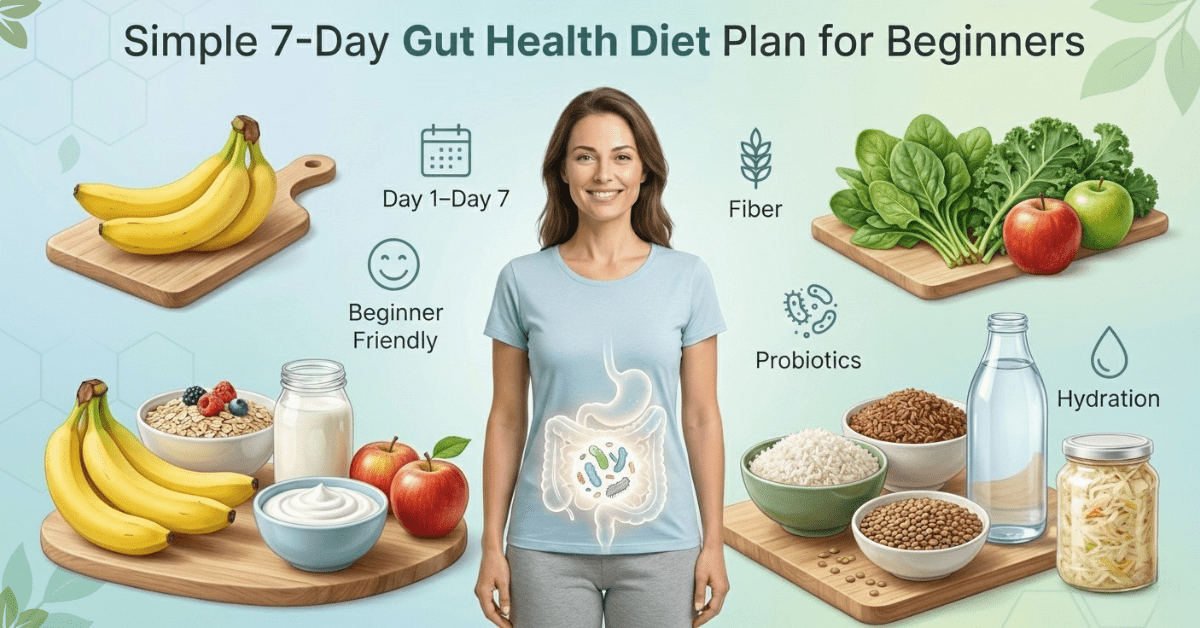
If you’re new to gut health, you’re not alone. Many people struggle with bloating, low energy, irregular digestion, or food confusion—and often don’t know where to start. The good news is that improving your gut health doesn’t require extreme diets or complicated rules. Small, consistent changes can make a big difference.
This simple 7-day gut health diet plan is designed especially for beginners. It focuses on whole, easy-to-find foods that support digestion, nourish good gut bacteria, and help your body feel more balanced. Over the next seven days, you’ll learn how to eat in a way that supports your gut naturally—without stress, counting calories, or giving up foods you enjoy.
By the end of this plan, you’ll have a clearer understanding of what helps your gut thrive and how to build healthier eating habits you can stick with long term.
What Is Gut, and Why Does It Matter?
Your gut is an essential system of your body that helps in digestion and waste removal. It mainly includes the stomach and intestines. However, the gut has other functions than digestion. There are trillions of small bacteria, most of which are beneficial for your body. These good bacteria help your body break down food, help in better nutrient absorption, boost your immune system, and help improve your mood and focus.
A healthy gut benefits your entire body. You feel more energized, your digestion is smoother, your immunity improves, and you may feel calmer and happier. However, if your gut is unhealthy, it can be the result of eating too much junk food or sugary foods or not getting enough fiber, which can make you feel fatigued, bloated, or sick or have digestive issues.
The good news is that eating the appropriate foods and following good habits can help your gut get healthy. Eating fruits, vegetables, whole grains, and fermented foods helps the growth of beneficial bacteria in your gut. Every day, a healthy stomach allows your body and mind to function more efficiently.
In this blog, we will discuss a balanced and healthy diet and foods that will help you improve your gut health.
How Does Your Gut Really Work?
When you eat, your digestive system breaks down food step by step so that your body can absorb it. As food passes through your stomach and intestines, beneficial gut bacteria help finish the job. They break down certain elements of food, particularly fiber, and convert them into useful substances that protect your gut lining and keep it running smoothly.
Healthy gut bacteria also help you:
- Absorb essential nutrients from food (like vitamins and minerals)
- Fight bad bacteria and viruses that could harm you
- Control your mood and emotions (yes, your gut affects your brain!)
- Maintain a healthy weight by helping you digest food properly
- Keep your immune system strong so you don’t get sick easily
However, eating an excessive amount of junk food, sugary snacks, and overly processed foods can destroy these beneficial microorganisms. When harmful bacteria take over, digestion slows, and symptoms such as gas, bloating, constipation, and low energy occur. Maintaining balance in the gut makes your entire body feel better every day.
The Best Foods for Gut Health
Fiber
Fiber is essential for a healthy gut. It helps to feed beneficial bacteria in your gut. According to health experts of organizations like the FDA and many more, an adult should consume 21-38g of fiber daily, which can be different depending on their age.
There are two kinds of fiber: Soluble Fiber and Insoluble Fiber. When soluble fiber interacts with water, it helps keep your blood sugar and cholesterol in control, which makes you feel full longer. Insoluble fiber makes waste bigger and stops constipation. It helps with waste removal.
You can easily get fiber from foods, like apples with peel, pears, oats, whole-wheat bread, beans, lentils, broccoli, bananas, almonds, and chia seeds.
Fermented Foods
Fermented foods are beneficial for your gut health because they have probiotics in them. The NIH says that probiotics (good bacteria) help with digestion, protect the lining of your gut, manufacture vitamins, and boost your immune system.
Fermented foods that can be easily found are yogurt and kefir (containing “live cultures”), sauerkraut, kimchi, miso, and kombucha. Even a little bit of them daily can help your gut.
When you go shopping, look for fermented foods that are refrigerated and not pasteurized. Heat can kill the healthy bacteria. Eating these foods can help keep your gut healthy and in balance.
Prebiotic Foods
Prebiotics are what your beneficial gut bacteria feed on. These are types of food that your body can’t break down, but your good bacteria can use them to survive and function properly. Probiotics and prebiotics work together because beneficial bacteria also need something to survive.
Garlic, onions, bananas, asparagus, leeks, whole grains, almonds, pistachios, artichokes, and flaxseeds are all some of the best prebiotic-rich foods. You can easily include these foods in your meals and snacks every day. Eating these prebiotic foods regularly helps to keep the bacteria in your stomach in balance. It helps with digestion, immunity, and overall health.
Anti-Inflammatory Herbs and Spices
Inflammation in your gut is like a fire that slowly damages the walls of your digestive system. Certain herbs and spices act like firefighters, putting out this inflammation naturally. Gut-friendly herbs and spices like
- Turmeric
- Ginger
- Oregano
- Basil
- Rosemary and Thyme
- Peppermint
Adding these anti-inflammatory herbs and spices to your diet helps to soothe inflammation in your gut and improve gut health.
Foods You Should Avoid
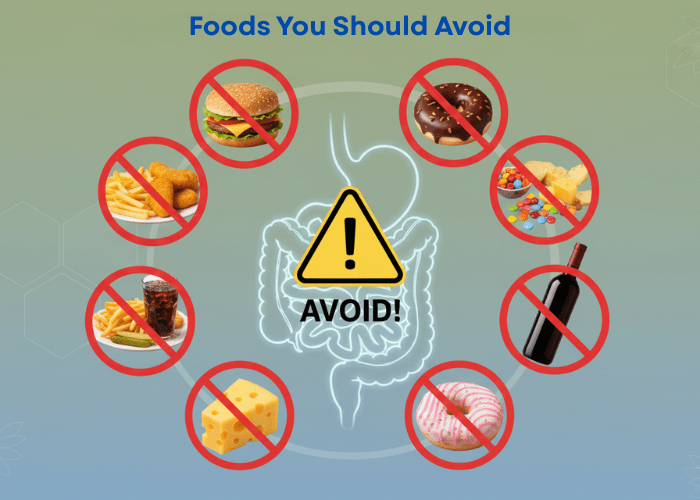
Just as some foods are beneficial for your gut health, others can be harmful and decrease the number of beneficial bacteria. You should try to avoid eating:
- Packaged and fast foods
- Artificial sweeteners
- Too much sugar
- Refined vegetable oils
- Foods with many additives
- Too much alcohol
- Too much red meat
Easy-to-Follow Gut Health Diet Plan
| Day | Early Morning | Breakfast | Lunch | Evening Snack | Dinner |
| Mon | Warm Water + Lemon | Oats Porridge with Apple & Cinnamon (Prebiotic fiber) | Bajra Roti + Sarson Saag + Jaggery + White Butter | Kanji (Fermented Carrot Drink) | Moong Dal Khichdi with Ghee and Steamed Peas |
| Tue | Jeera (Cumin) Water | Vegetable Poha (Flattened rice with peas, carrots, peanuts) | Brown Rice + Rajma (Kidney Beans) + Cucumber Salad | Roasted Chana (Chickpeas) | Pumpkin Soup + 1 Multigrain Toast |
| Wed | Warm Water + Turmeric | Idli (Fermented) + Coconut Chutney + Sambar | Multigrain Roti + Gobi (Cauliflower) Sabzi + Buttermilk | Fruit (Guava/Papaya) | Dalia (Broken Wheat) Upma with mixed vegetables |
| Thu | Warm Water | Besan Cheela (Gram flour pancake) with Mint Chutney | Curd Rice + Tadka (Mustard seeds/Curry leaves) | Handful of Almonds (Soaked) | Paneer Bhurji + Roti + Green Salad |
| Fri | Methi Water | Stuffed Paratha (Radish/Mooli) + Curd | Chole (Chickpeas) + Brown Rice + Onion Salad | Kanji | Millet (Foxtail) Khichdi + Sautéed Beans |
| Sat | Warm Water + Lemon | Upma (Semolina) with Ginger & Curry leaves | Thali: Dal + Seasonal Sabzi (Turnip) + Roti + Buttermilk | Roasted Makhana (Foxnuts) | Grilled Fish/Tofu + Stir-fried Greens |
| Sun | Jeera Water | Dosa + Vegetable Sambar | Bajra Khichdi + Kadhi (Yogurt-based curry) | Fruit | Light Vegetable Soup + Sautéed Paneer |
Tips for Your Perfect Gut Health Diet
Add Fiber Slowly
Don’t eat 40 grams of fiber at once if you have not been eating regularly. Your gut bacteria and body need time to adjust. Start by adding one new fiber-rich food per week. This prevents issues such as bloating and gas.
Drink Plenty of Water
Fiber works best when it absorbs water. Without enough water, fiber can actually cause issues like constipation. Drink 8-10 glasses of water daily. It will keep you hydrated and also help your fiber intake.
Eat All Types of Foods
Different foods have different nutrients. Red tomatoes, orange carrots, yellow squash, green spinach, and purple cabbage—eat them all! Eating all types of foods helps your overall beneficial bacteria.
Include Both Probiotics and Prebiotics
Remember that probiotics are the workers, and prebiotics are their food. You need both of them for a truly healthy gut. Eat fermented food most days and include prebiotic foods at every meal. It will help you get a healthy gut in no time.
The Surprising Health Benefits You’ll Experience
When you start eating foods that are beneficial for your gut health, you also get many other benefits in overall health.
- More Energy: Your gut bacteria help absorb B vitamins and iron, which fuel your body’s energy production.
- Better Digestion: Fiber and probiotics make your digestion smooth and regular. Say goodbye to constipation!
- Improved Mood: Did you know 90% of your serotonin (the happy hormone) is made in your gut? Improving your gut health also helps make you happier!
- Clearer Skin: A healthy gut means less inflammation throughout your body, including on your skin. Many people notice their acne improves.
- Stronger Immunity: Your gut is home to 70% of your immune system. Good bacteria train it to fight off colds and flu.
- Healthier Weight: Good bacteria help you feel fuller longer and digest food more efficiently.
- Better Blood Sugar Control: Fiber slows down sugar absorption, preventing energy crashes and mood swings.
- Lower Cholesterol and Blood Pressure: Soluble fiber actually traps cholesterol in your digestive system and removes it from your body.
Frequently Asked Questions
Why should I care about gut health?
When your gut health is better, your whole body also feels better. You have more energy, a better mood, healthier skin, and you don’t get sick easily. But when your gut health is not good because of eating bad food, your body and mood can also be affected.
How will I know that my gut health is poor?
You can feel tired, bloated, constipated, sick more often, or angry and moody. Bad bacteria can multiply in your gut when you eat unhealthy meals, are stressed out, or don’t get enough fiber.
Is food better than probiotic supplements?
Yes. Fermented foods are usually better because they have probiotics as well as vitamins and minerals. Supplements are only useful in some conditions, such as when you’re sick, after taking antibiotics, or when you’re traveling.
How long does gut improvement take?
You can see small changes in just a few days. But you will normally start to feel better in your digestion, energy, and mood within 1 to 4 weeks. After a few months of regular healthy choices, you will see more long-term benefits.
What’s the best vegetable for gut health?
Eating all vegetables is healthy for your gut and your overall health. But broccoli, carrots, spinach, asparagus, and sweet potatoes are some of the most beneficial vegetables. Eating different kinds of vegetables every day helps your body break down meals better and keeps your gut healthy.
What foods harm gut health the most?
Processed food, too much sugar, artificial sweeteners, unhealthy oils, an excessive amount of red meat, and foods with many chemicals can all damage your gut health. Eating these foods can make your gut and digestion unhealthy.
Is a gut health diet expensive?
No. A gut health diet doesn’t have to be expensive. Oats, beans, bananas, apples, carrots, and whole grains are all affordable, easy to find, and extremely healthy foods for your gut.
Final Thoughts
Your gut isn’t just about digestion—it’s the root of your overall health. The gut-friendly diet you follow today is building the health you’ll experience tomorrow. By eating plenty of fiber, including fermented foods, adding prebiotic vegetables and grains, and reducing processed junk, you’ll get a stronger immune system, better mental health and mood, more stable energy throughout the day, healthier weight management, protection against serious diseases, and happier, healthier gut bacteria that will thank you for the nutritious food!
Remember that gut health is a journey, not a destination. So, start today with one small change, and your beneficial gut bacteria will give you incredible health benefits.
Your gut is your foundation. Build it strong, and everything else will follow.

I now use home remedies like turmeric tea and ginger every day. These simple, plant-based solutions help my body heal itself. Nature gives us all we need to stay healthy, without complicated formulas.