

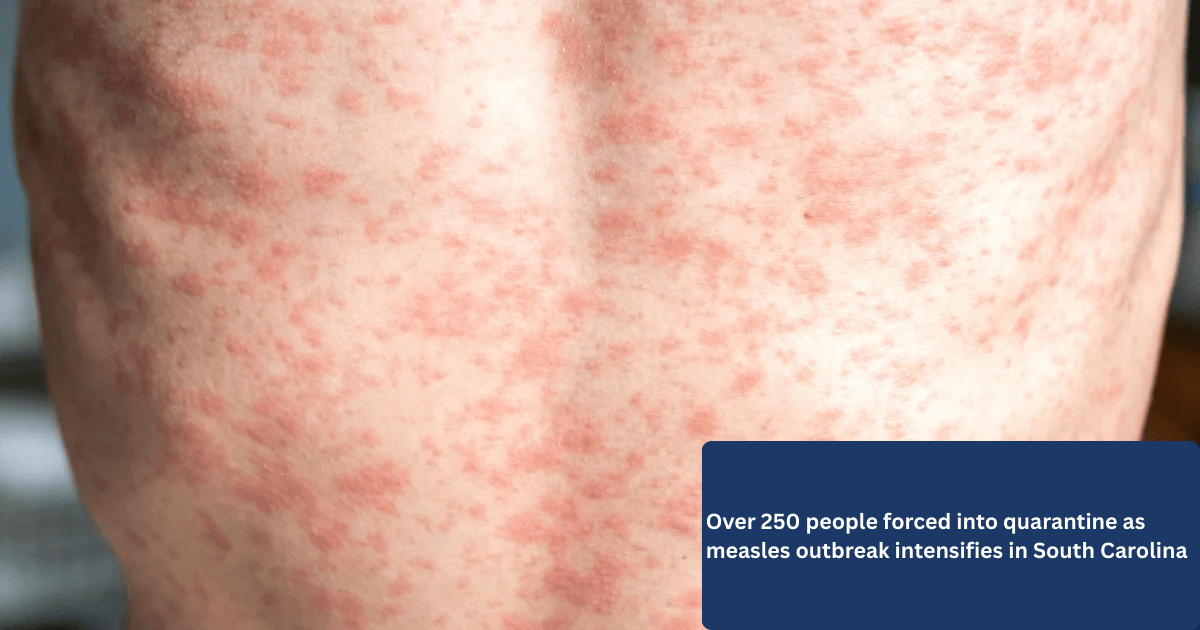
The headline is stark: more than 250 people have been placed under quarantine as a measles outbreak sweeps through parts of South Carolina. According to recent reporting, the outbreak — centered in Spartanburg County — has already resulted in over a hundred confirmed measles cases.
As the number continues to grow, health officials are racing to contain the spread. This blog aims to explain the who, why, and how of the outbreak — and outline what residents (and anyone concerned about measles) should know to protect themselves and their communities.
What the Numbers Show — and What They Hide
As of the latest update:
- There are at least 114 confirmed cases related to the outbreak that began in July 2025, with 111 of those concentrated around Spartanburg County.
- Of the confirmed cases, nearly everyone was unvaccinated — 105 of the 111 cases had no record of vaccination.
- Others: three were partially vaccinated, two had unknown vaccination status, and one was fully vaccinated.
- In response, over 250 individuals have been ordered into quarantine following exposure risk — a number that reflects the seriousness of the outbreak.
- Some community-level reporting puts the number of individuals in quarantine at as high as 280, as more exposures (e.g., in schools, community settings) are identified.
But the “quarantined” figure doesn’t necessarily translate to “infected.” Rather, it represents people who might have been exposed — and who are being asked to isolate as a precaution.
This distinction is critical: among quarantined individuals, many may never develop the disease. Still, given how contagious measles is, quarantine is an essential tool to prevent the outbreak from exploding further.
What Triggered the Outbreak — and Why It Spread So Rapidly
Although the exact “first case” (the index case) has not been widely publicized, public health data and reporting suggest a confluence of risk factors:
- Low vaccination coverage in some communities or institutions: The vaccination data from confirmed cases show a striking pattern — the vast majority were unvaccinated. That suggests immunity gaps that allowed the virus to spread. Ars Technica+1
- High transmissibility of measles: Measles remains one of the most contagious viruses. According to the broader US context of measles outbreaks this year, the virus has spread rapidly through clusters of unvaccinated people. Wikipedia+1
- Gatherings and exposure sites — including schools and community institutions: The outbreak in South Carolina has been linked to exposures at multiple schools and at least one church.
- Delayed detection — or delayed quarantine: Because measles often starts with non-specific symptoms (like fever, cough, runny nose) and people may be contagious before symptoms appear, infections can spread widely before authorities recognize the outbreak.
In combination, these factors created a “perfect storm” environment: a highly infectious disease + pockets of unprotected people + places of close contact = rapid community spread.
Quarantine: What It Means, Why It Matters
When health experts say “over 250 people quarantined,” it reflects a key public-health strategy. But what does quarantine involve — and why is it necessary?
- Who gets quarantined? — People who have been identified via contact tracing as having significant exposure to a confirmed measles case. This could include classmates, coworkers, church attendees, household members, or others who spent time in shared spaces. If someone lacks documented immunity (either from prior infection or vaccination), they are more likely to be quarantined.
- What quarantine involves — Isolation from others for the duration of the disease incubation period (for measles, typically up to 21 days). During quarantine, individuals are asked to avoid work, school, gatherings, and unnecessary contact; monitor for symptoms; and report any signs of illness.
- Why quarantine matters — Because measles can spread even before symptoms become severe, and because the virus is airborne and highly contagious, one infected individual can infect many others. Quarantine helps “break the chain,” reducing the chance that those exposed will unknowingly transmit the virus further.
In effect, quarantine transforms what might be a small cluster into a full-blown outbreak — or halts the outbreak in its tracks.
Symptoms of Measles — What to Watch Out For
Understanding measles symptoms is key, especially if you or someone you know may have been exposed. Typically, measles manifests as:
- High fever, often 3–5 days before a rash — sometimes above 104°F (40°C).
- Respiratory symptoms: cough, runny nose, red/watery eyes (conjunctivitis).
- Small white spots inside the mouth (Koplik spots) — a classic but less visible early sign.
- A spreading red blotchy rash — usually starting on the face and behind the ears, then spreading down the body over several days.
Complications from measles can be serious, especially for vulnerable groups: infants, pregnant women, immunocompromised people, or those with chronic illness. Complications may include pneumonia, ear infections, encephalitis (brain swelling), dehydration, and even death in severe cases.
Because symptoms resemble flu or other common illnesses early on, many cases may go unrecognized — which is why vaccination and preventive measures are so important.
Why Measles Has Re-Emerged — and What This Outbreak Shows About Broader Trends
To many people, measles might seem like a disease of the past — one that children were vaccinated against decades ago. But in 2025, measles is making a troubling comeback across the United States.
According to recent surveillance and outbreak data:
- The broader 2025 measles surge — including the outbreak in South Carolina — is part of a pattern that involves multiple states and diverse communities.
- The resurgence is being driven largely by pockets of under- or un-immunized individuals, either because of vaccine hesitancy, lack of access, or gaps in public-health outreach.
- Communities that once achieved “herd immunity” thresholds are now vulnerable again — particularly when vaccination rates slip below critical levels.
The South Carolina outbreak underscores that measles elimination does not mean eradication. As long as measles circulates globally, and as long as there are gaps in immunity, outbreaks remain possible — even in countries with good healthcare infrastructure.
How Public Health Authorities Are Responding
In response to the outbreak, public health and community stakeholders have mobilized quickly:
- Contact tracing & quarantine orders — Health officials have identified exposure sites (schools, church, community centers) and placed potentially exposed individuals under quarantine.
- Outreach and communication — Schools, parents, and community hubs have been notified; parents of students at exposure-linked schools have been informed.
- Vaccination drives — For unvaccinated individuals (especially children and young adults), vaccination remains the best defense. The disease being so contagious means that rapid vaccination efforts can help stop further spread.
- Education & awareness — Local media and health departments are urging residents to check their immunization status, stay alert for symptoms, and cooperate with public health instructions for quarantine/isolation when needed.
These efforts are essential not only to control the outbreak, but also to rebuild public trust, prevent panic, and avoid misinformation — a longstanding challenge in vaccine-preventable disease outbreaks.
What Residents (and Families) Should Do — Right Now
Whether you live in South Carolina or anywhere else — if you’re concerned about measles, or traveling to affected areas — these are practical steps to stay safe:
✓ Check and confirm your vaccination status
If you’re unvaccinated or unsure whether you received two doses of the MMR (measles-mumps-rubella) vaccine, you should consider getting vaccinated as soon as possible. Even adults benefit. Public clinics, pharmacies, and primary-care providers may help.
✓ Monitor for symptoms closely
If you or someone in your household develops fever, cough, runny nose, red eyes, or a rash — especially after known exposure — seek medical advice promptly. Avoid public places and contact with others until a doctor evaluates you.
✓ Comply with quarantine or isolation orders when instructed
If health officials determine you were exposed, follow their guidance. Even without symptoms, quarantine helps prevent further spread.
✓ Practice caution during travel or large gatherings
Until the outbreak is declared over, large gatherings — especially in areas with known measles transmission — pose elevated risk. If traveling to or from affected regions, take precautions and avoid contact with vulnerable people (infants, unvaccinated, immunocompromised).
✓ Encourage vaccination, not stigma
If you know people who are hesitant about vaccination — share reliable information, encourage them to consult medical professionals. Outbreaks like this are a public-health issue, not a reason to stigmatize individuals.
The Bigger Picture: Why This Outbreak Matters
This measles outbreak in South Carolina — and its rapid spread — is more than a local problem. It reflects broader public-health truths and challenges:
- No place is immune: Even in developed countries, outbreaks can re-emerge when immunity gaps exist. Measles doesn’t care about borders, politics, or education.
- Vaccination remains our best defense: The MMR vaccine is safe, effective, and remains the most effective tool to prevent serious measles outbreaks. High vaccination coverage isn’t just about individuals — it protects entire communities.
- Public health requires vigilance and cooperation: Contact tracing, quarantine, communication — these measures only work if individuals comply, communities cooperate, and authorities act transparently.
- Preparedness counts: As this outbreak shows, health systems must stay ready. Surveillance, rapid response, outreach, and resource allocation are vital.
In short: the resurgence of measles is a warning, not a surprise. It underscores the need for sustained commitment to vaccination, public-health infrastructure, and community awareness.
What Comes Next — and What to Watch For
As the outbreak develops, a few key questions and indicators will shape how the situation evolves:
- Will more cases emerge? — As contact tracing identifies new exposures, the number of quarantined individuals and confirmed cases may rise.
- Will vaccination efforts ramp up? — Success depends on how quickly unvaccinated individuals get immunized. Late vaccination may still help reduce spread or severity.
- Will any complications or hospitalizations occur? — Measles can be especially risky for infants, pregnant women, and immunocompromised people. Monitoring for complications will be important.
- Will public trust and community compliance hold? — For quarantine and vaccination efforts to succeed, community buy-in and transparent public messaging are essential.
- Will this outbreak trigger changes in policy or vaccination drives beyond South Carolina? — As measles cases spread, other states may take note — perhaps prompting renewed vaccine campaigns, outreach, or even mandates for high-risk settings.
Final Thoughts
The news that over 250 people have been forced into quarantine as a measles outbreak intensifies in South Carolina is jarring — but it’s also a call to action. It shows what can happen when a highly infectious disease meets immunity gaps, close-contact settings, and lapses in vigilance.
Yet, it does not need to spiral into a larger catastrophe. The tools are all there: vaccination, quarantine, public health communication, and community cooperation. What the outbreak demands is awareness — and action.
If you live in or travel to areas with measles outbreaks, check your vaccination status, stay alert for symptoms, and follow public health guidance. And if you know someone hesitant about vaccination, consider talking to them about the risks and benefits — because protecting one person helps protect many.
Outbreaks like this remind us: the fight against measles is far from over. But with vigilance, cooperation, and science on our side, we can — and must — do better.
Disclaimer
All the information presented in this article has been collected and referenced from reputable and publicly available sources, including major news websites, official health department sites, and other credible online platforms. This article is for informational purposes only. We do not guarantee the accuracy, completeness, or timeliness of any external content. Readers are advised to verify details through official sources and original websites.
Referance Website
This Article based on all these website-
Ars Technica+2dph.sc.gov+2
dph.sc.gov+1
Ars Technica+2SC Daily Gazette+2
SC Daily Gazette+2dph.sc.gov+2
