

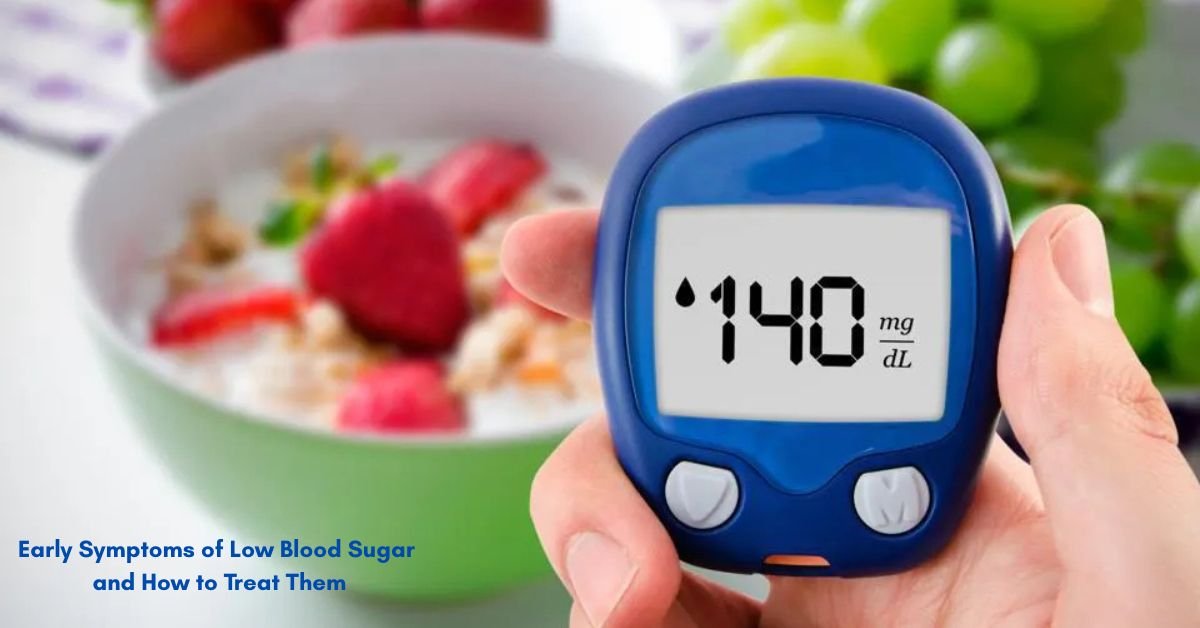
Symptoms of Low Blood Sugar can appear when glucose levels fall below normal, leaving the body without enough energy. Common symptoms include shakiness, sweating, dizziness, hunger, fatigue, and difficulty concentrating. In some cases, symptoms of low blood sugar may also involve mood changes, headaches, or blurred vision. Recognizing the symptoms of low blood sugar early is important to take quick action and prevent more serious health complications.
engaging in any physical activities like running or exercising. Many people are unaware that these symptoms, such as sudden shakiness, sweating, or dizziness, are common signs of low blood sugar levels, a condition that can happen to anyone.
People without diabetes can also suffer from low blood sugar. This can happen to anyone, from a child to an elder, and even those who think they are perfectly healthy. That’s why knowing low blood sugar is essential.
In this blog, we’ll talk about everything in a simple way. By the end, you’ll learn what low blood sugar is, what the common symptoms are, why it happens, and how to avoid it.
What is Low Blood Sugar?
Low blood sugar, also known as hypoglycemia, is a condition in which the amount of glucose (sugar) in your bloodstream drops below a healthy level. Glucose is like fuel for your body that is necessary for functioning smoothly, like providing energy to your brain, muscles, and every single cell.
A blood sugar level between 70 mg/dL (3.9 mmol/L) and 140 mg/dL (7.8 mmol/L) is typical and healthy for most people. This means that your body gets the energy it needs to work well.
Low blood sugar is when your blood sugar level drops below 70 mg/dL (3.9 mmol/L). Your body may start sending warning signs like shaking, sweating, or feeling dizzy at this time, and you need to act swiftly. You should never ignore low blood sugar since it can be hazardous.
Your body usually keeps your blood sugar levels in a healthy range. But sometimes, your body doesn’t work right, and your blood sugar levels drop too low, which is bad for your health.
Recognizing the Symptoms of Low Blood Sugar
One of the most important things to understand is that low blood sugar symptoms can appear rapidly, sometimes in just a few minutes. Here’s what symptoms you need to watch for:
Read Also– SugarMute Reviews
Early Symptoms of Mild to Moderate Low Blood Sugar
These are early symptoms that show up and give you a chance to take care of low blood sugar before it becomes worse:
- Shaking or shivering
- Sweating
- Fast or hammering heartbeat
- Very hungry
- Feeling dizzy
- Worrying or being nervous
- Being irritable or moody
- Weakness or tiredness
- Pain in the head
- Tingling around the lips or tongue
- Pale skin
- Having trouble focusing
Quick Tip: If you notice any of these symptoms, don’t ignore them as a normal issue. It might be your body trying to tell you something important. If you have these symptoms, check your blood sugar often to treat it before it progresses further.
Severe Symptoms: When Low Blood Sugar Gets Dangerous
If low blood sugar isn’t treated quickly, it can get much worse. Here are the serious warning signs that require immediate help:
- Confused
- Strange or unusual behavior
- Vision that is blurry or like a tunnel
- Hard to talk or speech that is slurred
- Loss of coordination
- Bad dreams or nightmares
- Seizures or convulsions
- Loss of awareness
- Coma
Remember: Severe low blood sugar is a medical emergency that needs immediate help.
Understanding the Causes of Low Blood Sugar
Now that you recognize the signs, let’s look at why blood sugar drops. Knowing the root causes can help you stop them before they start, keeping you healthier and balanced for good.
For People with Diabetes
- Taking too much diabetic medication or insulin
- Not getting enough carbs
- Not eating meals on time or skipping them
- More than necessary exercise or physical activity
- Drinking alcohol without eating anything
- Having an illness or an infection
- Problems with timing
- The weather is hot and humid
- Changes in hormones occur when stressed
For People Without Diabetes
- Taking someone else’s diabetes medicine accidentally
- Taking heart medicines and antibiotics can lower blood sugar
- Liver disease
- Kidney disease
- Severe infections or critical illness
- Not eating enough
- Excessive alcohol drinking without food
- Rare pancreatic tumors
- Hormone imbalances
The Treatment Plan
If you think you have low blood sugar or have been diagnosed with it, then taking immediate action is very important. Here’s the step-by-step plan for helping with low blood sugar:
The “15-15 Rule” for Mild to Moderate Low Blood Sugar
This is the gold standard recommended by doctors and diabetes organizations for preventing and treating low blood sugar:
Step 1: Eat or drink 15-20 grams of fast-acting carbohydrates immediately
For example, you can choose any of the ones given below:
- Glucose tablets or gel (as per prescription)
- Fruit juice, about ½ cup
- Regular soda: about ½ can
- 1 tablespoon of honey or sugar
- Candy
- 1 cup of milk
Step 2: Wait 15 minutes and check your blood sugar again
If you have a blood sugar meter, test yourself frequently. If you don’t have one, wait and see if your symptoms improve.
Step 3: If still low, repeat
If your blood sugar is still below 70 mg/dL, eat or drink another 15-20 grams of carbs and wait another 15 minutes.
Step 4: Have a snack or meal
Once your blood sugar is back to normal, eat something more substantial within an hour—like crackers with peanut butter, a sandwich, or a piece of fruit with cheese. This prevents your blood sugar from dropping again.
For Severe Low Blood Sugar
People who have very low blood sugar and can’t eat or drink on their own (they’re unconscious or can’t swallow) need glucagon. There are two kinds of glucagon, a drug that quickly increases blood sugar levels:
- An injection type
- A nasal spray type
Important: If you have diabetes and take insulin, ask your doctor about getting a glucagon kit. Make sure your family and friends know how to use it in an emergency. Always call 911 after giving glucagon or if someone loses consciousness.
How to Prevent Low Blood Sugar
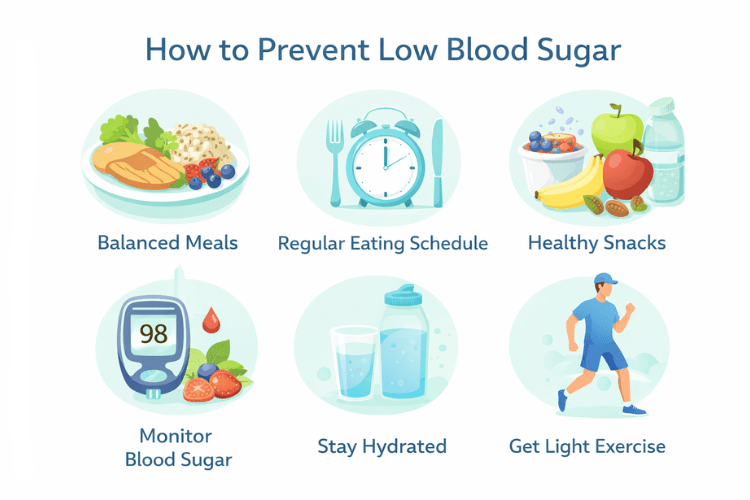
The best medicine is prevention. Here’s how to keep your blood sugar stable:
If You Have Diabetes
- Check your blood glucose regularly
- Eat regular meals and snacks
- Learn your medication timing
- Carry fast-acting carbs
- Before driving or physical activity
- Exercise safely by consulting your doctor
- Don’t drink alcohol without food
- Wear medical alert identification
- Talk to your healthcare team regularly
- Use a Continuous Glucose Monitor (CGM); it can alert you before your blood sugar gets too low
If You Don’t Have Diabetes
- Eat frequent small meals
- Avoid long periods without eating
- Limit alcohol, especially on an empty stomach
- Consult your doctor to know the exact reason
- Learn what symptoms appear first for you
Difference Between Mild and Severe Low Blood Sugar
| Level | Blood Sugar Range | Symptoms | What to Do |
| Mild to Moderate | 54-70 mg/dL | Sweating, shaking, feeling hungry and anxious, and having a fast heartbeat | Eat 15-20g of fast-acting carbs right away |
| Severe | Below 54 mg/dL | Seizures, confusion, loss of consciousness, and trouble talking with people | Call 911 or get emergency help immediately; use glucagon if available |
Nighttime Low Blood Sugar: A Special Concern
Symptoms of low blood sugar can appear while you sleep, and you might not notice them. Some of the signs include:
- Waking up with damp sheets from sweating
- Nightmares or restless sleep
- Waking up with a headache
- Feeling worn out or confused when you wake up
Prevention tip: If you’re at risk, ask your doctor about a CGM (Continuous Glucose Monitor). It can help alert you if your blood sugar drops during the night.
When You Can’t Feel Low Blood Sugar: “Hypoglycemia Unawareness”
Some people, especially those who’ve been suffering from diabetes for many years, stop noticing the symptoms of low blood sugar. Hypoglycemia unawareness is dangerous because you don’t know until it’s severe. If this happens to you:
- Check your blood sugar more frequently
- Use a Continuous Glucose Monitor (CGM)
- Consult your doctor, so they might adjust your medications or goals
- Get trained in hypoglycemia awareness (ask your doctor; they can help)
Remember These Important Points
- Low blood sugar is serious but treatable
- The “15-15 rule” works: Eat 15-20g of fast-acting carbs, wait 15 minutes, and check again
- Regular meals, medication timing, and monitoring can help you prevent low blood sugar
- Always carry glucose or carbs if you’re at risk of low blood sugar
- Make sure friends and family know your symptoms and how to help you
- Regular check-ins help prevent problems before they start
- Let people know you have diabetes or are at risk for low blood sugar
- Use technology devices such as CGMs and insulin pumps
When to Consult Your Doctor or Call the Emergency Number
Call the emergency number immediately if:
- Someone is unconscious or losing consciousness
- Someone is having seizures
- Low blood sugar symptoms don’t improve after eating carbs
- You’re confused or can’t think clearly
- You suspect someone has severe low blood sugar, and you don’t know what to do
Call your doctor if:
- You have low blood sugar episodes regularly
- You’re having trouble recognizing low blood sugar symptoms
- Your current treatment isn’t working
- You’re afraid of having low blood sugar
Frequently Asked Questions
1. What is low blood sugar?
Low blood sugar (hypoglycemia) happens when your blood sugar level drops below about 70 mg/dL, which means your body’s cells are not getting enough sugar for energy production, and your body will not be able to function normally.
2. What are the first signs and symptoms of low blood sugar?
Early Symptoms of low blood sugar include shaking, sweating, feeling extreme hunger, a rapid heartbeat, dizziness, headache, and feeling nervous or irritable. These are your body’s warning signals that you should act quickly to treat it.
3. Can low blood sugar be dangerous?
Yes. If low blood sugar is not treated for a long period of time, it can cause confusion, seizures, or loss of consciousness, or even put you in a coma, and it needs urgent medical help.
4. Is low blood sugar common in children?
Yes, low blood sugar is common in infants and less common but still possible in older children. Children with diabetes can have low blood sugar, especially with insulin, missed snacks, or heavy play. Schools and caregivers should know how to spot and treat it.
5. What should I avoid eating if I have low blood sugar?
Try to avoid foods heavy in fat, such as chocolate or ice cream, because they slow down the absorption of sugar and may keep your blood sugar from rising quickly.
Final Thoughts
Low blood sugar affects millions of people, but with proper care, it’s simple to manage. Knowing about the symptoms, how to treat them quickly, and taking steps to prevent them, you can live a healthy, active life without fear.
Talk to your doctor if you have diabetes or think you could be at risk for low blood sugar. They can help you make a plan for your daily routine that will keep your blood sugar levels healthy and tell you exactly what to do if they go too low.
Remember, your health is worth the attention. Take it seriously, stay informed, and never hesitate to seek help when you need it.

I now use home remedies like turmeric tea and ginger every day. These simple, plant-based solutions help my body heal itself. Nature gives us all we need to stay healthy, without complicated formulas.